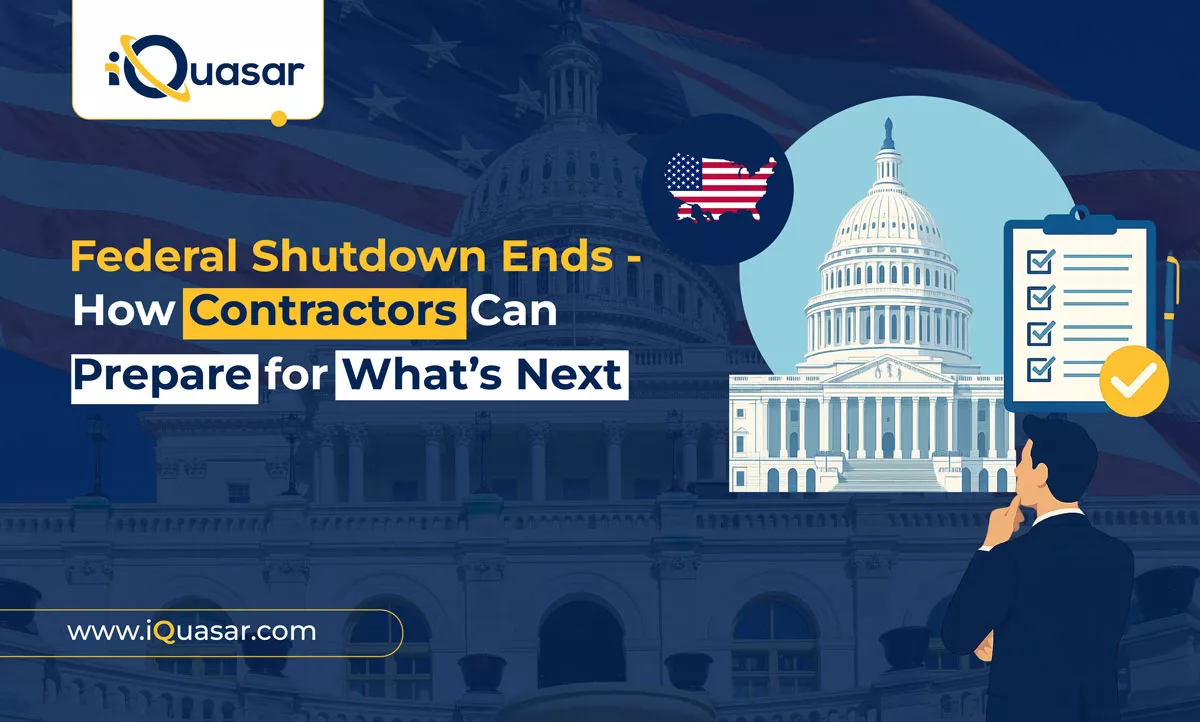
The recent federal government shutdown, which stretched from October 1 to November 12, 2025, lasting a full 43 days, has officially gone down as the longest in U.S. history. The shutdown created disruptions across agencies, programs, and acquisition timelines at a critical moment, the start of Fiscal Year 2026. As operations begin returning to normal, contractors are navigating a highly compressed environment shaped by delayed obligations, reactivated contract actions, and accelerated timelines. Understanding what comes next and preparing internally for the post-shutdown landscape is essential for maintaining continuity and capturing the surge of opportunities that follows such funding lapses.
Post-Shutdown Planning
As the funding is restored, agencies have begun rapidly recovering from the halted operations, creating an immediate ripple effect for contractors. The shutdown paused most procurement actions, resulting in a concentrated backlog that agencies must clear quickly to stay aligned with FAR 7.104 requirements for timely awards. Contractors should expect a surge of solicitation releases, shorter proposal windows, and faster evaluations as agencies compress delayed work into a shortened FY 2026 timeline.
Additionally, the shutdown “will delay federal spending and have a negative effect on the economy that will mostly, but not entirely, reverse once the shutdown ends,” according to the Congressional Budget Office, meaning agencies must now obligate funds more quickly, often producing clusters of opportunities, an uptick in limited-competition or sole-source actions, and bridge contracts to maintain continuity.
Beyond procurement, agencies must also restart the non-excepted activities suspended under OMB and OPM shutdown guidance, creating significant administrative backlogs that directly affect contractors, delayed CO/COR communications, postponed reviews and approvals, rescheduled oversight activities, and queued modifications or invoices.
As agencies work through this workload, many rely heavily on contractors to restore mission momentum, increasing demand for surge staffing, backlog processing support, rapid onboarding, and expanded labor hours. GovCons that stay agile, pre-positioned, and ready with surge capacity will be best positioned to capture opportunities in this accelerated post-shutdown environment.
How Should Contractors Prepare for the Post-Shutdown Environment?
With the government now recovering from the longest shutdown since 2018–2019, GovCons must take proactive steps to confirm status, maintain compliance, manage financial exposure, and position themselves for accelerated opportunities. The following actions are essential:
Confirm Contract Status and Re-Engage with Your Contracting Officer
As soon as agencies resume operations, contractors should promptly confirm the status of their active contracts and re-establish communication with their Contracting Officers (COs) and Contracting Office Representatives (CORs). This includes validating whether a stop-work order was issued, whether a restart notice is required, and whether any performance deadlines, reporting requirements, or deliverables have shifted due to the shutdown. No work should resume without explicit written authorization from the government.
Early re-engagement ensures alignment on expectations, prevents inadvertent noncompliance, and positions contractors to respond quickly as programs restart.
Resume Performance and Catch Up on Delayed Deliverables
Once written authorization is received, contractors should resume work immediately and take steps to realign performance with revised agency schedules. This includes submitting any delayed deliverables, updating project plans based on new timelines, clearing administrative backlogs such as invoices or status reports, and coordinating with government stakeholders to confirm new milestone dates.
Because many agencies are accelerating activities to recover from the shutdown, contractors should expect condensed timelines and prepare to adapt swiftly to rebaselined priorities.
Also Read: FAR Part 19 Overhaul: What It Means for Small Businesses
Document Financial and Operational Impacts
It is crucial to maintain detailed documentation of all impacts stemming from the shutdown, including:
- Idle labor hours
- Lost productivity
- Delayed or duplicated work
- Subcontractor or vendor impacts
- Additional costs incurred to restart work
- Schedule disruptions requiring corrective actions
This documentation is essential for evaluating whether the situation supports the preparation of a Request for Equitable Adjustment (REA). Any REA submitted must align with cost principles under FAR Subpart 31.2, which govern the allowability, reasonableness, and allocability of claimed costs.
Reassess Pipeline Priorities and Capture Strategy
With agencies releasing delayed opportunities and accelerating obligations through FY 2026, contractors should reassess their entire pipeline. This includes reviewing paused solicitations, tracking recompetes that were pushed into the shutdown window, reevaluating capture strategies based on updated government needs, and preparing for shorter turnaround times on RFQs and RFPs.
Proposal teams must be ready for rapid activity, as agencies compress weeks of procurement actions into a narrow post-shutdown timeline.
Strengthen Organizational Resilience and Readiness Measures
Contractors should use lessons from the 2025 shutdown to reinforce internal readiness. This includes building cash flow reserves to manage delayed payments, strengthening surge capacity for proposal and staffing responses, diversifying clients across agencies with different funding profiles, and formalizing internal shutdown protocols such as stop-work procedures, communication plans, and documentation standards. These efforts enhance continuity during future funding lapses and ensure contractors remain agile during operational disruptions.
The end of a federal shutdown doesn’t simply restart government operations; it generally unleashes a compressed, high-velocity acquisition environment filled with opportunities for contractors who are prepared to respond quickly. Those who actively monitor resurging opportunities, strengthen proposal readiness, maintain compliance, and proactively manage risk are best positioned to take advantage of the surge in contract obligations that historically follows the return of appropriations.
As a trusted partner supporting federal contractors for more than two decades, iQuasar helps organizations navigate uncertain and rapidly shifting federal environments through comprehensive opportunity monitoring, proposal development, capture support, contract strategy, and compliance services. For real-time updates and peer-led discussions throughout the shutdown, the iQuasar Community served as an active hub where GovCons exchanged insights, monitored agency-level developments, and clarified contracting implications in real time.
The post-shutdown period can be challenging, but it is also full of potential, and we ensure you are ready for both. To discuss how we can support your federal contracting goals in the post-shutdown landscape, reach out to iQuasar today.