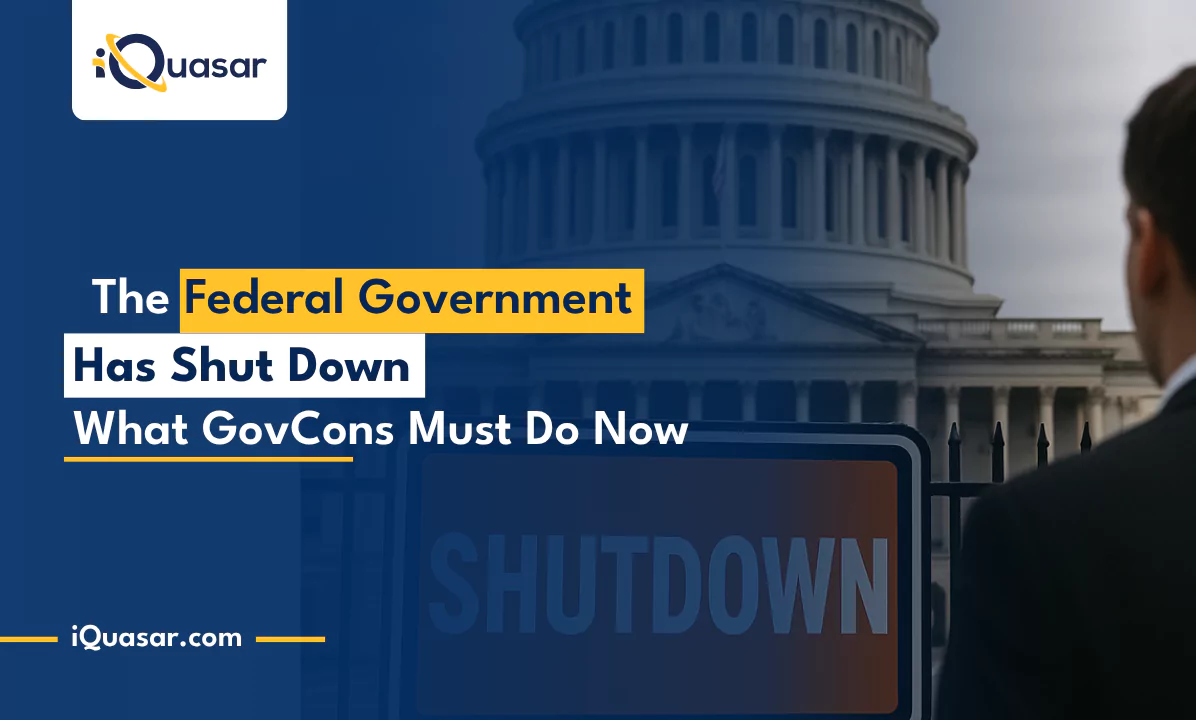
The federal government shutdown of 2025 is not just a headline – it’s a reality impacting tens of thousands of government employees and contractors right now. When the clock struck midnight on October 1, funding for many federal operations suddenly froze, creating uncertainty and disruption across the government contracting community. For government contractors, this shutdown is more than a political stalemate – it’s a challenge that demands swift action, clear strategies, and careful planning to protect their business and workforce.
What the Shutdown Means Today
A government shutdown happens when Congress fails to pass the necessary funding bills to keep federal agencies fully operational. This time, deep disagreements over healthcare subsidies and budget priorities between President Trump’s administration and Congress triggered the closure. Crucial non-essential government functions are halted, resulting in the furlough of around 750,000 federal employees and the suspension of services such as regulatory activities, many administrative operations, and national parks. However, essential services, such as the military and emergency responders, continue to work without pay until funding is restored.
This shutdown brings immediate disruption to how government agencies operate on a day-to-day basis, which directly affects contractors tasked with supporting these agencies. Many contracts need federal oversight or funding to continue, and when these elements are absent, contract work often slows or stops, causing ripple effects throughout the supply chain.
The Shutdown’s Impact on Government Contractors
Government contractors face a complex set of challenges during shutdowns:
- Payment Delays and Cash Flow Interruptions: Contracting officers who authorize payments may be furloughed, leading to invoice delays.
- Suspended or Delayed Contract Performance: Without government direction or approval, contractors may have to pause work, especially on contracts funded by current-year appropriations.
- Workforce Management Challenges: Contractors may need to reassign, reduce hours, or furlough employees to manage labor costs since billable work is uncertain.
- Risk of Increased Costs and Administrative Burden: Restarting operations after an unexpected halt incurs additional costs and complexity.
- Contract Type Variability: Fixed-price contracts funded by prior-year money may continue, but cost-reimbursement or time-and-materials contracts face higher risks of shutdown.
Besides operational hurdles, contractors must also navigate the legal complexities embedded in Federal Acquisition Regulation (FAR) clauses related to stop-work orders and suspension of work, which can provide rights to recover certain shutdown-related costs.
How Long Will This Last?
Predicting the duration of the 2025 shutdown remains challenging. Senate negotiations are not expected to pick up until October 4, and with political tensions high, resolution could take weeks. Historical precedent offers a range: the 2018-2019 shutdown lasted a record 35 days, whereas earlier shutdowns have typically lasted only a few days. Contractors must prepare for an extended period of uncertainty and potential operational halt.
Proactive Strategies for Government Contractors
Despite this uncertainty, contractors can take concrete steps to lessen the negative effects of the shutdown on their business. Here’s how:
1. Understand Your Contracts Inside and Out
- Review your contracts for FAR clauses like 52.242-14 (Suspension of Work) to know your rights for claims and equitable adjustments.
- Identify which contracts are funded by prior-year or indefinite appropriations and thus exempt from suspension.
- Prepare to submit written notices promptly to preserve eligibility for cost recovery related to the shutdown.
2. Maintain Open Communication with Contracting Officers
- Reach out early to your contracting officers to clarify how the shutdown impacts specific contracts.
- Request formal stop-work orders if applicable, which safeguards your ability to claim related costs.
- Document all communications meticulously to protect your claims and maintain a strong business position.
3. Manage Cash Flow and Workforce Proactively
- Assess available liquidity—consider lines of credit or reserves to cover expenses during payment delays.
- Reassign employees to work on exempt contracts, training, or internal initiatives rather than idling them.
- Use paid time off or reduce work hours before furloughs to minimize workforce disruption.
- Prepare notification plans aligned with labor laws for any potential furloughs or layoffs.
4. Strengthen Supply Chain and Subcontractor Coordination
- Communicate with subcontractors on shutdown impacts and clarify whether work should stop if contracting officers issue orders.
- Verify subcontract agreements on stop-work terms to avoid unpaid performance issues.
- Monitor supply costs and delivery timelines that may be affected by the shutdown.
5. Document Every Cost Related to the Shutdown
- Rigorously track labor costs, overhead, and other shutdown-related expenses.
- Maintain clear records of mitigation efforts and communication to support claims for equitable adjustments.
- Segregate these costs to simplify submission and auditing once funding resumes.
6. Diversify and Plan for the Future
- Broaden your contract portfolio across different agencies and non-federal markets to reduce dependency risks.
- Develop a tailored shutdown contingency plan for each contract to stay ready for future funding uncertainties.
Staying Resilient Amid Shutdown Challenges
This shutdown reminds the GovCon community that contractors who remain informed, proactive, and strategic can minimize financial damage and protect their workforce during these trying times. The key is preparation – understanding contract terms, maintaining strong communications, managing finances carefully, and documenting everything related to shutdown impacts.
At iQuasar, we are committed to helping government contractors navigate this complex landscape with clear insights and practical solutions. Our team stands ready to support resilience and recovery throughout the shutdown and beyond. Contact us today to learn more about our services for government contractors.