The federal government is not just encouraging agencies to buy smarter, it is measuring them on it. Spend Under Management (SUM) has moved from a procurement performance concept to an enforced standard. In 2026–2027, its momentum is reshaping how federal dollars flow and who gets access to them. If your firm is still building its pipeline primarily around monitoring SAM.gov for individual solicitations, the structural shift underway is creating a disadvantage for firms relying solely on traditional opportunity monitoring.
What Is Spend Under Management?
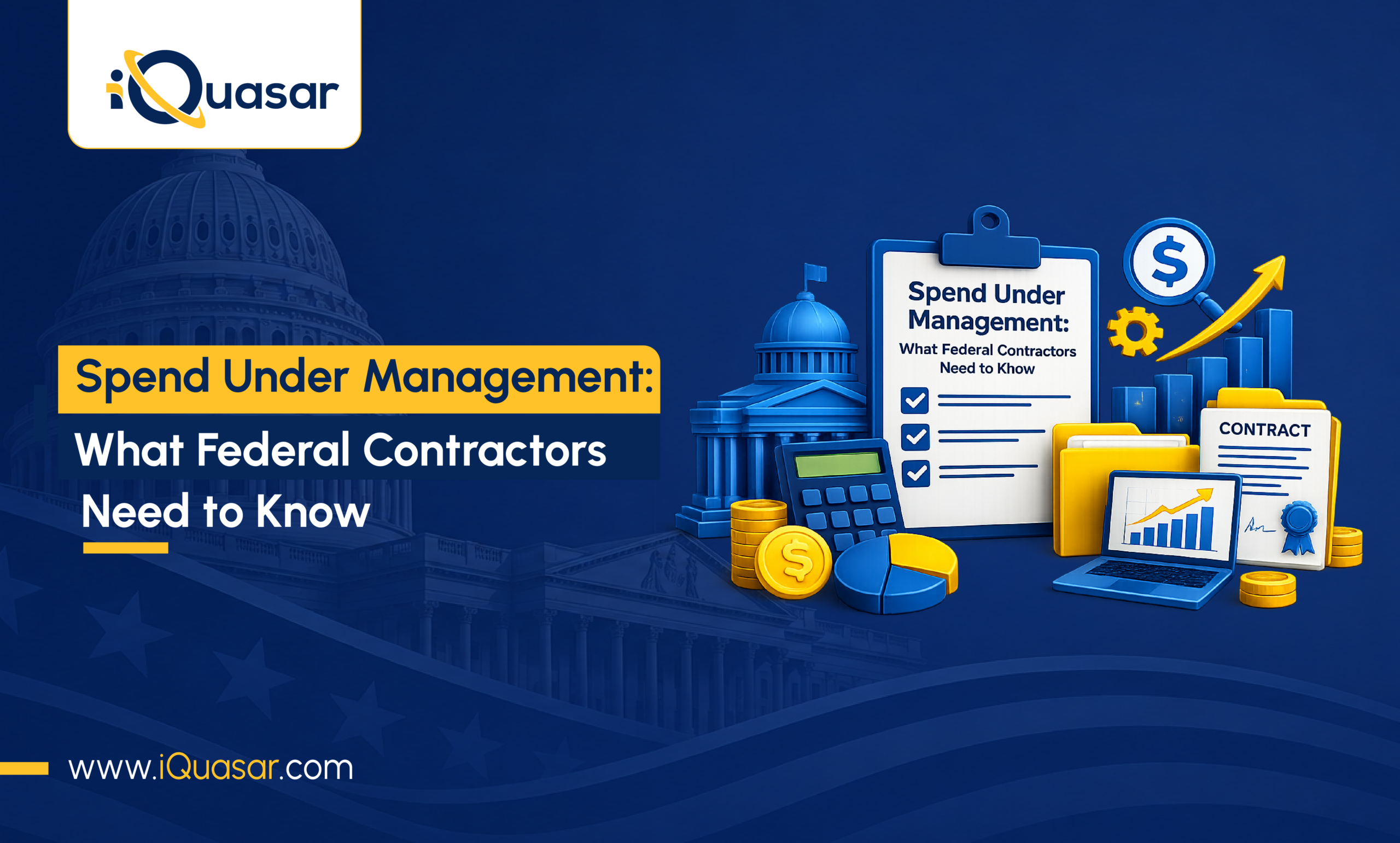
Spend Under Management is the federal government’s primary metric for tracking how much of its procurement spending flows through approved, structured acquisition solutions rather than unmanaged, open-market contracts. The higher an agency’s SUM percentage, the more its purchasing is concentrated within vehicles that the government can monitor, analyze, and optimize for cost and efficiency.
SUM is organized into four tiers that reflect the level of active management of a procurement.
- Tier 0 represents unmanaged spend, typically, standalone, open-market contracts with no data reporting and no alignment to strategic sourcing goals. This is what the government is systematically reducing.
- Tier 1 covers agency-wide preferred or, in some cases, mandatory-use solutions.
- Tier 2 encompasses multi-agency contracts shared across agencies.
- Tier 3 Best-in-Class (BIC) is the highest designation, reserved for governmentwide vehicles that OMB has certified as the preferred or required channel for a given category of spend.
SUM sits at the core of the category management framework, which organizes federal procurement across ten common spending categories, IT, professional services, human capital, logistics, and facilities, among them. The goal, as OMB frames it, is for the government to buy as a single enterprise: consolidating purchasing power, reducing contract duplication, and generating the spend visibility needed to negotiate better outcomes across every category.
What Changed in 2025–2026
The policy environment around SUM intensified significantly over the past year, driven by executive action and OMB implementation guidance that together represent the most consequential consolidation push in a decade.
On March 20, 2025, President Trump signed Executive Order 14240 – Eliminating Waste and Saving Taxpayer Dollars by Consolidating Procurement, directing every federal agency to submit procurement consolidation proposals to the GSA Administrator and formally designating GSA as the executive agent for all governmentwide IT acquisition contracts. That single designation shifted federal IT spending toward GSA-managed GWACs. No prior policy guidance had done the same.
In July 2025, OMB issued Memorandum M-25-31, “Consolidating Federal Procurement Activities,” providing detailed implementation guidance. The memo directed agencies to prioritize consolidation for requirements that are commercialized, easy to standardize, and mission-agnostic, precisely the categories where open-market, agency-specific contracts have historically proliferated. Agencies are now held to year-over-year SUM improvement targets, and contracting officers who choose open-market alternatives face a growing documentation burden to justify the deviation.
The practical result is a steady, structural shift in federal spending from Tier 0 to Tiers 2 and 3, and that shift is accelerating.
Why This Matters for Contractors
The implications of SUM’s expansion are operational, not abstract.
- The visible open-market opportunity pool is shrinking, while task-order competition within contract vehicles is expanding. As agencies concentrate spending through BIC vehicles and approved GWACs, fewer standalone solicitations appear on SAM.gov for the categories those vehicles cover. Contractors who rely on SAM.gov monitoring as their primary business development tool are watching their addressable market contract in real time. Often, they don’t realize why.
- Work is being funneled into closed ecosystems. Task orders under BIC vehicles are completed only among vehicle holders. If your firm does not hold a position on the relevant vehicle, no amount of technical capability or agency relationship will get you in front of that opportunity. The procurement market is consolidating around fewer access points, and firms without positions on those access points might face significant barriers to entry.
- The barrier to entry rises with every procurement cycle. Every on-ramp that closes is another year or more before the next opportunity to qualify. Firms that have not yet pursued positions on high-SUM vehicles are not simply behind; they are falling further behind with each passing cycle as spend concentration increases, and competition intensifies within those closed pools.
The strategic model has changed. The federal market is no longer primarily a find-and-bid environment. It is an access-first, compete-second environment. The firm that secures a vehicle position earns the right to compete. The firm that does not have an entry, regardless of its qualifications.
How Agencies Are Being Measured and Why It Matters to You
Understanding SUM as an agency performance metric explains contracting officer behavior in ways that policy analysis alone does not.
Agencies report SUM performance annually, and those scores carry real institutional weight. Contracting officers who consistently route spend through approved vehicles are aligned with their leadership’s measured goals. Those who pursue open-market alternatives for requirements covered by a BIC vehicle must produce written justification, a bureaucratic hurdle most contracting officers are unwilling to take on without a compelling mission-specific reason.
For contractors, this means the contracting officer is not just a procurement professional. They are a performance metric in motion. Knowing which vehicles their agency relies on, which categories are driving SUM improvement goals, and where an agency is underperforming on managed spend creates an intelligence advantage that translates directly into earlier positioning and stronger task order win rates.
How Contractors Can Benefit
SUM’s expansion is not a threat to every contractor. For firms holding positions on high-SUM vehicles, the concentration of federal spend into structured ecosystems creates a predictable, sustained pipeline of task-order opportunities, deeper agency relationships, and repeat-business potential that open-market competition rarely delivers.
The contractors building durable federal market positions right now are identifying the BIC vehicles and GWACs with the highest spend in their target categories such as OASIS+ Phase II, CIO-SP4, Polaris, and Alliant 2 and actively pursuing on-ramp opportunities as they open. They are building on past performance aligned with those vehicle categories, investing in teaming relationships that provide vehicle access while independent qualifications develop, and monitoring agency-specific SUM goals to identify where the next concentration of spending is being built.
They are also treating compliance and operational maturity as competitive advantages. BIC vehicles carry data reporting, pricing transparency, and FAR compliance requirements. Firms that execute those requirements reliably earn credibility with agency ordering officials, and that credibility compounds into repeat task order awards and long-term program relationships.
For contractors not yet positioned on major vehicles, iQuasar’s Government Contracting Consulting Services provide a structured path from market assessment through vehicle pursuit strategy and growth planning. For firms already executing on vehicles and looking to maximize task order win rates, iQuasar’s Capture Management and Contract Vehicle Support services deliver the pre-award rigor that converts vehicle access into actual revenue.
Also Read: Federal Contracting in 2026: Key Updates, Policy Shifts, and Market Trends
The Market Is Reorganizing Around Access Points; Position Accordingly
In recent years, over 70% of federal addressable spend has been brought under management, reflecting a sustained shift toward structured acquisition strategies.
SUM is not a metric that lives inside a government dashboard. It is the mechanism reshaping who participates in the federal market, on what terms, and through which channels. Firms that understand this shift and act on it with a deliberate vehicle strategy will hold the positions that matter when agencies concentrate their spend. Those that don’t will find themselves competing for a shrinking share of what remains.
If your organization is evaluating its contract vehicle coverage or refining its approach to high-SUM procurement channels, iQuasar’s team can support you with a structured, insight-driven assessment of your current positioning and practical next steps. Whether you are exploring new vehicle opportunities or strengthening your existing footprint, our focus is on helping you make informed, strategic decisions aligned with market realities.
Explore our Government Contracting Consulting Services or get in touch to discuss your specific goals.