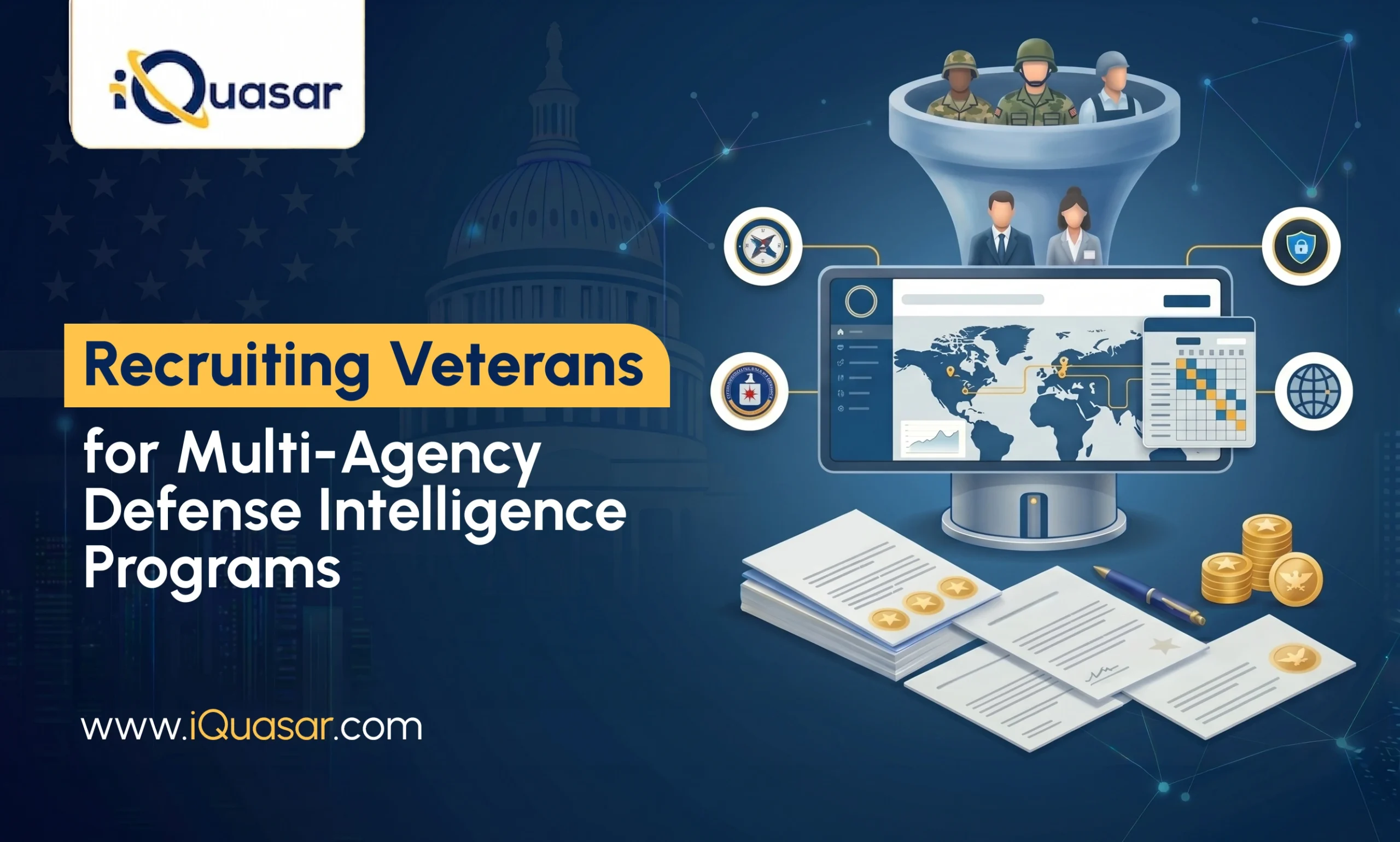
Recruiting veterans for defense intelligence programs requires more than technical sourcing; it demands professionals who understand mission environments, security protocols, and operational workflows across federal agencies. When a defense contractor supporting organizations such as USSOCOM, DISA, DHS, and the Department of the Army needed qualified personnel across intelligence, cybersecurity, and program support roles, the challenge was identifying candidates with the right clearances, certifications, and mission readiness. iQuasar addressed this need by leveraging its veteran talent networks to recruit cleared, mission-aligned professionals capable of supporting complex, multi-agency defense programs.
The Client
The client is an 8(a) Woman-Owned Small Business IT services and solutions provider with more than two decades of experience supporting the Department of Defense and federal civilian agencies. The company specializes in automated infrastructure, cybersecurity, enterprise software, and data systems that enhance integration, security, reliability, and operational performance across federal environments.
The organization supports a wide portfolio of prime contracts and subcontracts across agencies, including USSOCOM, DISA, DHS, NCIS, DOJ, FBI, the Department of the Treasury, and the Department of the Army. These programs involve mission-critical activities spanning intelligence support, cybersecurity operations, enterprise IT modernization, and administrative program management.
Because these engagements operate within highly regulated federal environments, the contractor requires professionals who possess both technical expertise and the ability to work effectively in defense mission environments.
The Problem/Opportunity
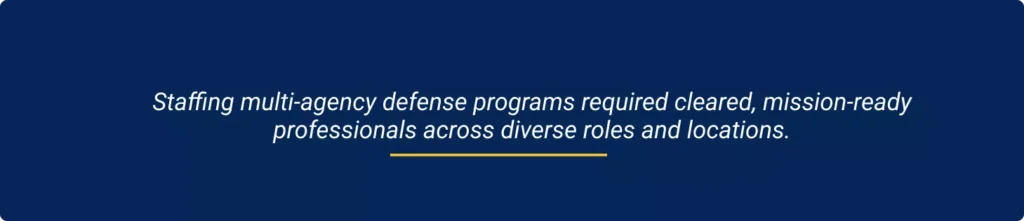
Traditional recruiting lacked access to candidates with both clearance and mission experience across multiple agencies.
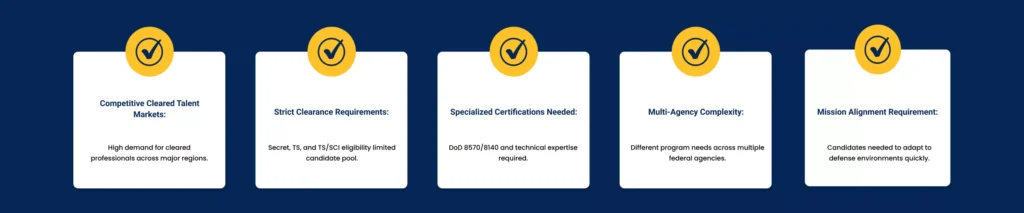
Supporting multiple defense and intelligence agencies simultaneously created a complex hiring landscape for the contractor. The organization needed to fill positions across several disciplines—including intelligence analysis, IT operations, cybersecurity, and administrative program support, while meeting strict federal hiring requirements.
Competitive Cleared Talent Markets:
Many of the roles were located in regions known for high demand for cleared professionals, including the Washington, D.C. metropolitan area, Texas, North Carolina, and Ohio. These regions host numerous defense contractors and federal agencies competing for the same limited pool of candidates with security clearances and defense experience. This level of competition made it difficult to consistently identify candidates who met both the technical and security requirements for the roles.
Security Clearance Requirements:
Most of the open positions required active Secret or Top-Secret clearances, and some roles required TS/SCI with CI Polygraph eligibility. Security clearances significantly reduce the available candidate pool because many otherwise qualified professionals cannot immediately meet the clearance requirements. For programs operating within defense intelligence environments, waiting for new clearances or reinvestigations was not feasible. The contractor needed candidates who could contribute quickly while maintaining compliance with federal security standards.
Specialized Technical Skills and Certifications:
Many roles require professionals with niche technical competencies, including cybersecurity expertise aligned with DoDI 8570 / 8140 certification requirements. These certifications are essential for professionals working within Department of Defense IT environments and are often required before individuals can perform operational duties. Identifying candidates who possessed both the required certifications and the relevant mission experience added another layer of complexity to the hiring process.
Multi-Agency Staffing Complexity:
Because the contractor supported multiple federal programs simultaneously, the hiring effort needed to address different mission requirements, agency standards, and onboarding processes. Each agency engagement carried its own operational expectations, making it critical to recruit professionals who could quickly adapt to diverse program environments.
Managing staffing needs across multiple agencies required a recruitment strategy capable of balancing technical qualifications, security requirements, and mission alignment.
The iQuasar Solution
To address these challenges, iQuasar implemented a recruitment strategy centered on engaging experienced Army veterans whose skills aligned closely with defense intelligence program requirements.

1. Leveraging Veteran Talent Networks
As a V3-certified organization and Military Spouse Employment Partnership (MSEP) partner, iQuasar maintains strong connections within military and veteran communities. These networks include transitioning service members and veterans already working in federal contracting environments.
By leveraging these connections, iQuasar identified veterans with direct experience supporting military operations, intelligence activities, and defense technology systems.
2. Matching Military Experience with Agency Requirements
Many Army veterans possess experience working with defense technologies, cybersecurity operations, and intelligence systems similar to those used by federal agencies. iQuasar carefully evaluated candidates to ensure their military experience translated effectively to the contractor’s program requirements.
This alignment allowed the recruiting team to present candidates who were already familiar with defense mission environments and operational expectations, reducing the learning curve once hired.
3. Identifying Clearance-Ready Professionals
A key advantage of focusing on veterans was the availability of candidates who already held active security clearances or had recently worked within cleared environments. This helped reduce delays associated with clearance investigations and allowed the contractor to staff positions more quickly.
By prioritizing clearance-ready candidates, iQuasar helped maintain momentum across multiple agency programs.
4. Nationwide Veteran Placement Strategy
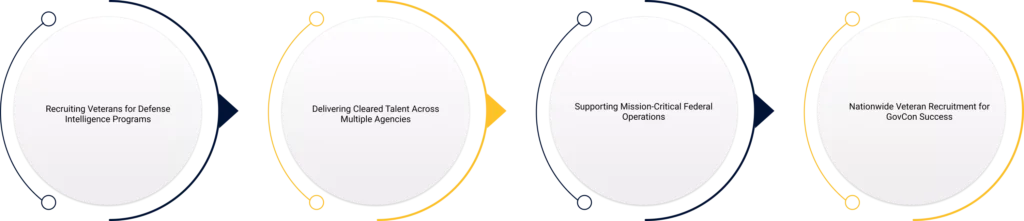
Because the contractor supported programs in several regions, iQuasar conducted a nationwide search to identify candidates willing to support roles across the East Coast, West Coast, and Northeastern United States.
This broader search enabled the recruiting team to connect the contractor with veterans whose skills and mission experience aligned closely with the technical and operational requirements of the programs.
How iQuasar Created Value
Through its veteran-focused recruitment strategy, iQuasar helped the contractor build a strong pipeline of candidates capable of supporting multiple defense intelligence programs simultaneously. By focusing on veterans with relevant mission experience and security clearances, the recruiting effort ensured that candidates could integrate quickly into the client’s operational environments.

This approach helped the contractor maintain staffing momentum across programs involving intelligence analysis, cybersecurity operations, IT support, and administrative services.
iQuasar Cleared Recruitment Service
This case demonstrates how iQuasar successfully recruits veterans for defense intelligence programs by aligning talent with technical requirements, security standards, and mission environments across multiple agencies. By leveraging veteran networks and cleared recruitment expertise, iQuasar helped the client build a reliable pipeline of qualified professionals capable of supporting complex federal programs.
For contractors managing multi-agency defense and intelligence initiatives, access to cleared, mission-ready talent is critical. iQuasar’s cleared recruitment services help organizations identify, engage, and deliver experienced professionals who support operational continuity and mission success.
Contact us today to learn more about how iQuasar supports contractors staffing mission-critical programs.