You’re managing your GSA Schedule contract, and suddenly, you receive an official notice titled “GSA MAS Refresh 30.” Now what? Many contractors’ experience confusion and urgency when they see these updates. Understanding what a GSA MAS Refresh is and how to respond is essential for staying compliant, keeping your contract active, and maintaining your competitive edge.
What is a GSA MAS Refresh?
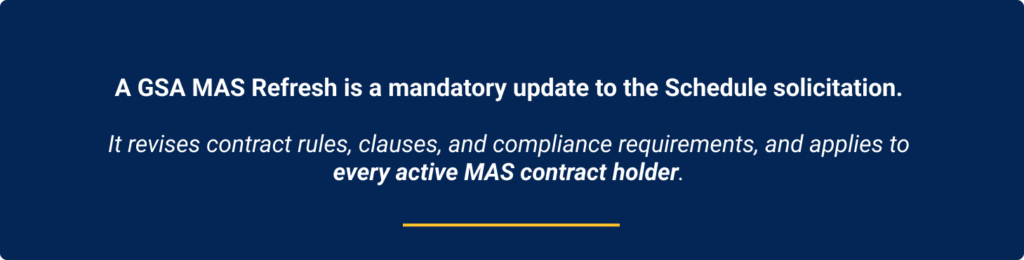
A GSA MAS Refresh is an official update to the General Services Administration’s Multiple Award Schedule (MAS) contract program. In plain terms, it’s a government-issued change that revises the rules, requirements, forms, and templates governing GSA Schedule contracts.
- Definition: A MAS Refresh is a formal revision to the solicitation document that applies to all Schedule contracts. This update can include regulatory changes, new policies, and updates to compliance requirements.
- Scope: Refreshes may affect everything from pricing templates to compliance rules, impacting thousands of contractors simultaneously.
- Key takeaway: Every contractor must pay attention. A MAS Refresh changes the official contract terms for both current and future contracts.
What is a Mass Modification (Mass Mod)?

Whenever GSA issues a MAS Refresh, every affected contractor receives a Mass Modification, often called a “Mass Mod.”
- Definition: A Mass Mod is a bulk contract update, notifying all contractors about the new rules introduced by the Refresh. Instead of updating contracts one by one, GSA uses Mass Mods to make sure every contractor gets the same update at the same time.
- How it works: All MAS contract Administrators and Authorized Negotiators automatically receive a notification about the Mass Mod through the GSA’s Mass Mod portal. Importantly, both Contract Administrators and Authorized Negotiators have the authority to accept the Mass Mod on behalf of the company.
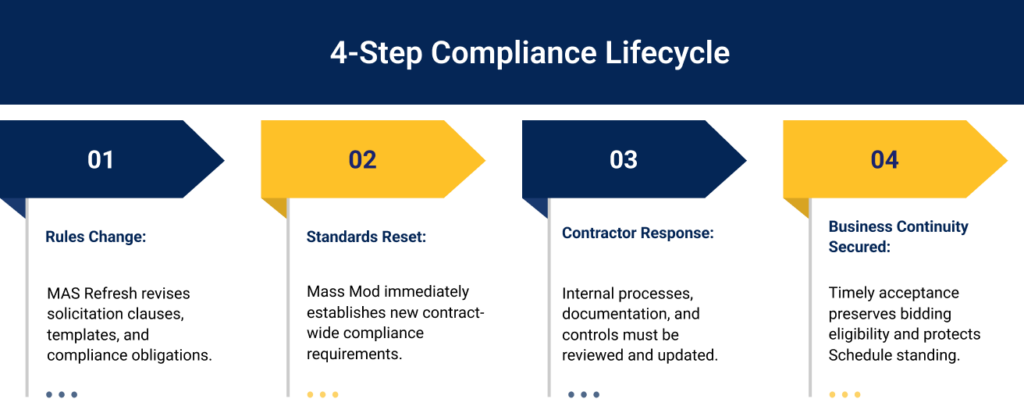
A Mass Mod resets the compliance standards instantly. Contractors are given a deadline to review and officially accept the new changes. Three essential things about Mass Mods:
- Sent electronically to every relevant Contract Administrator and Authorized Negotiator.
- You must respond by the deadline set by GSA.
- Covers every change included in the latest MAS Refresh, clauses, pricing, compliance, and more.
Why does GSA issue MAS Refreshes?
You might wonder: What makes GSA issue a new Refresh? The reason is simple, GSA keeps the MAS contract program up-to-date with changing laws, regulations, and government needs.
- Regulatory updates: New requirements in the Federal Acquisition Regulation (FAR) force the GSA to update all ongoing contracts.
- Policy changes: Rules about things like cybersecurity, environmental protection, or small business preferences can lead to a new Refresh.
- Market shifts: When the government sees new patterns in purchases, price standards, or contract categories, a Refresh keeps contracts relevant.
What usually triggers a Refresh?
- New laws or executive orders about federal contracting
- Changes to compliance or reporting rules
- GSA reviews reveal ways to make the program more efficient
What Actions Should Contractors Take When a GSA MAS Refresh is Issued?
Here’s what you need to do, quickly and carefully, whenever a new MAS Refresh appears:
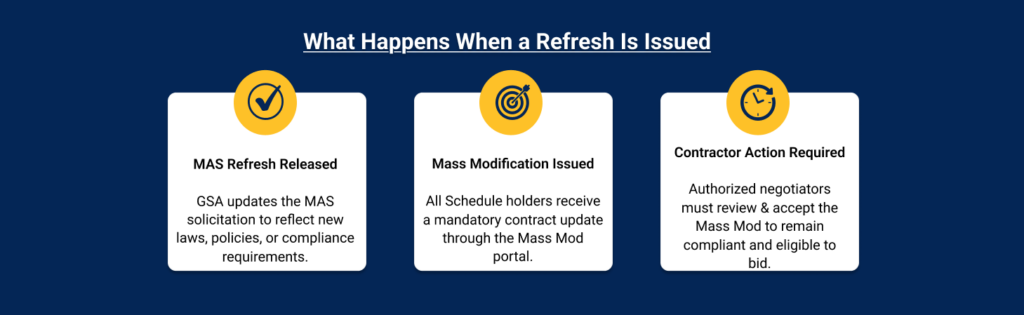
- Review the update: Carefully check the Refresh document, especially the clauses flagged as updated. The official GSA portal and sourcing channels provide practical breakdowns and clarifications.
- Update your compliance: If the Refresh changes policies or pricing models, adjust your internal processes and documentation.
- Accept the Mass Mod in the GSA MASS MOD Portal: Make sure your Contract Administrator or Authorized Negotiator logs in and accepts the new terms. The change will automatically update in GSA’s system.
What Changes Should Contractors Look for in GSA MAS Refreshes?
Each MAS Refresh is different, but some common updates include:
- Regulatory updates: New or revised rules about cybersecurity, privacy, or record-keeping.
- Policy clarifications: Clearer, updated definitions and requirements.
- Template changes: Adjustments in pricing and service categories, or terms and conditions.
Check these areas with each Refresh:
- Were there changes to reporting or audit requirements?
- Did terms for contract-wide requirements, like minimum order size, shift?
- Was your schedule’s category (SIN) or structure modified?
What Happens if You Don’t Accept a GSA MAS Refresh (Mass Mod)?
Not accepting a Mass Mod isn’t just an administrative error; it leads to real penalties.
- If you don’t accept on time, your contract is no longer compliant.
- You can’t bid on new task orders under your Schedule.
- GSA can suspend or terminate your contract.
- Your company’s reputation as a federal contractor may suffer.
Risks explained: Failing to accept a Mass Mod is recorded in the GSA system and can flag your business for more frequent reviews or even lead to losing your Schedule. Deliberate or repeated refusal to comply can block you from future government contracts.
Quick tips:
- Always make sure your Contract Administrator and Authorized Negotiators’ contact details are up to date.
- Set internal deadlines before the GSA’s cutoff to prevent missed opportunities.
- If you see issues with compliance, contact your GSA contracting officer right away.
Also Read: GSA MAS Refresh #30: Transforming Federal Contracting for 2025 and Beyond
Staying Ahead of GSA MAS Refreshes Is a Compliance Imperative
GSA MAS Refreshes are not administrative formalities; they are binding contract updates that redefine compliance expectations for Schedule holders. Each Refresh resets the rules of engagement, and every Mass Modification requires timely review, internal alignment, and formal acceptance to keep contracts active and competitive.
For contractors, the challenge extends beyond meeting deadlines. It lies in understanding how each Refresh affects pricing structures, SIN alignment, reporting obligations, and long-term Schedule strategy. Missed updates, outdated catalogs, or misaligned internal processes can quietly restrict eligibility, delay task order participation, or invite increased scrutiny from GSA. Contractors who manage MAS refreshes effectively treat them as part of ongoing contract governance, not one-time administrative actions. This includes monitoring regulatory changes, maintaining clear ownership of Schedule compliance, and proactively addressing gaps before they impact performance or growth.
For organizations navigating a recent MAS Refresh or looking to strengthen their overall GSA Schedule posture, structured guidance can help ensure updates are implemented accurately and without disruption. iQuasar supports contractors across the full GSA MAS lifecycle, from Refresh and Mass Mod review to catalog updates, compliance alignment, and post-award Schedule management, helping businesses remain compliant while positioning their Schedules for sustained success in the federal marketplace.