Over the years, working at the intersection of proposal strategy, stakeholder engagement, and deadline-driven delivery, I’ve seen the value of applying the Theory of Constraints in Proposal Management: it’s rarely the entire process that fails—more often, it’s a single choke point that slows everything down.
Whether it’s waiting for leadership approvals, juggling too many Red Team comments, or relying on that one overburdened subject matter expert, bottlenecks are everywhere. That’s where the Theory of Constraints (TOC) steps in as a timeless operations concept that holds surprising relevance for those of us navigating the complex world of GovCon and corporate proposals.
In this post, I want to share how I’ve started applying TOC principles to streamline my proposal development workflows and how this shift has led to reduced friction, faster approvals, and better collaboration.
So, what can we do?
Let’s unpack how TOC helps us identify, analyze, and break free from proposal bottlenecks — using real data and simple logic.
What is the Theory of Constraints (TOC)?
The Theory of Constraints (TOC), introduced by Eliyahu Goldratt, is rooted in one simple idea:
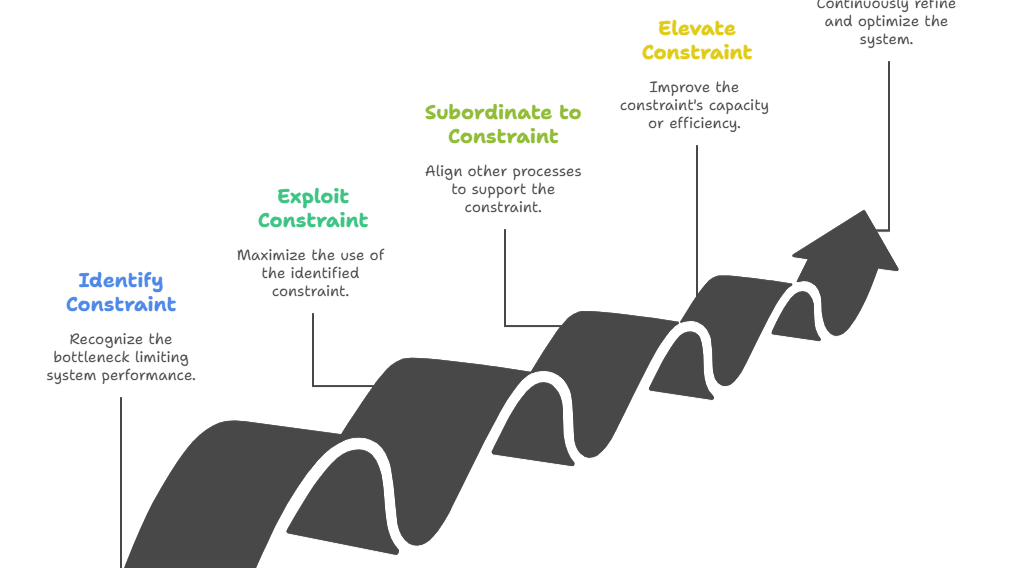
“A system is only as strong as its weakest link.”
In proposals, one stalled step—like stakeholder input or compliance checks—can delay the entire project.
How I Identified the Bottleneck
Early on, I treated every proposal task as critical. But reality taught me otherwise:
- Red Team reviews were consistently delayed.
- Executive sign-offs arrived dangerously close to deadlines.
- Reviewers were often overwhelmed with 40+ pages—too late in the game.
By observing these patterns, I realized: we weren’t late because of the writing—we were late because of where we placed pressure in the process.
How TOC Changed My Approach
Once I embraced TOC, I made a few key shifts:
- Tracked recurring delays to pinpoint constraints.
- Dedicated focused time for pricing and compliance—often the sneakiest sources of slowdown.
- Introduced staggered deadlines for reviewers to avoid bottlenecks stacking at the end.
- Streamlined approvals by sending executive summaries instead of full volumes for initial sign-off.
The result? A 40% improvement in on-time submissions and significantly reduced stress close to deadlines.
Why This Matters in GovCon
In today’s GovCon landscape, proposal timelines are tighter than ever.
I’ve seen:
- 2-page technical responses with 3-day turnarounds.
- 1–3 page capability statements required in RFIs or Sources Sought.
- Rapid-fire task order responses with minimal windows.
When everyday counts, bottlenecks become dealbreakers—not just inconveniences.
Practical Lessons for Proposal Teams
If you want to unlock better throughput without burning out your team:
- Visualize your full proposal workflow—from kickoff to submission.
- Identify and isolate your constraint—it’s often a person, a tool, or a decision step.
- Streamline inputs and reviews—shorter, earlier, and more frequent reviews work better.
- Automate repetitive steps—use trackers and templates to buy back time.
Final Thought
- The most meaningful transformation came when I stopped accepting delays as “just part of the process” and started fixing them.
- Proposal management isn’t just about writing—it’s about optimizing flow.
- The Theory of Constraints gave me a new lens—and every proposal team can benefit from it.
Want help applying these principles to your proposals? Our proposal writing services streamline your workflows, reduce bottlenecks, and boost your win rate.
About Author
 Iram is a certified CF APMP Proposal Manager with 4+ years of experience who leads cross-functional teams to win federal and commercial contracts. She drives proposal excellence by integrating compliant bid strategies, streamlined processes, and quality improvements to stay competitive in GovCon markets. Focused on customer-centric, high-quality solutions, she excels in team leadership and proposal development.