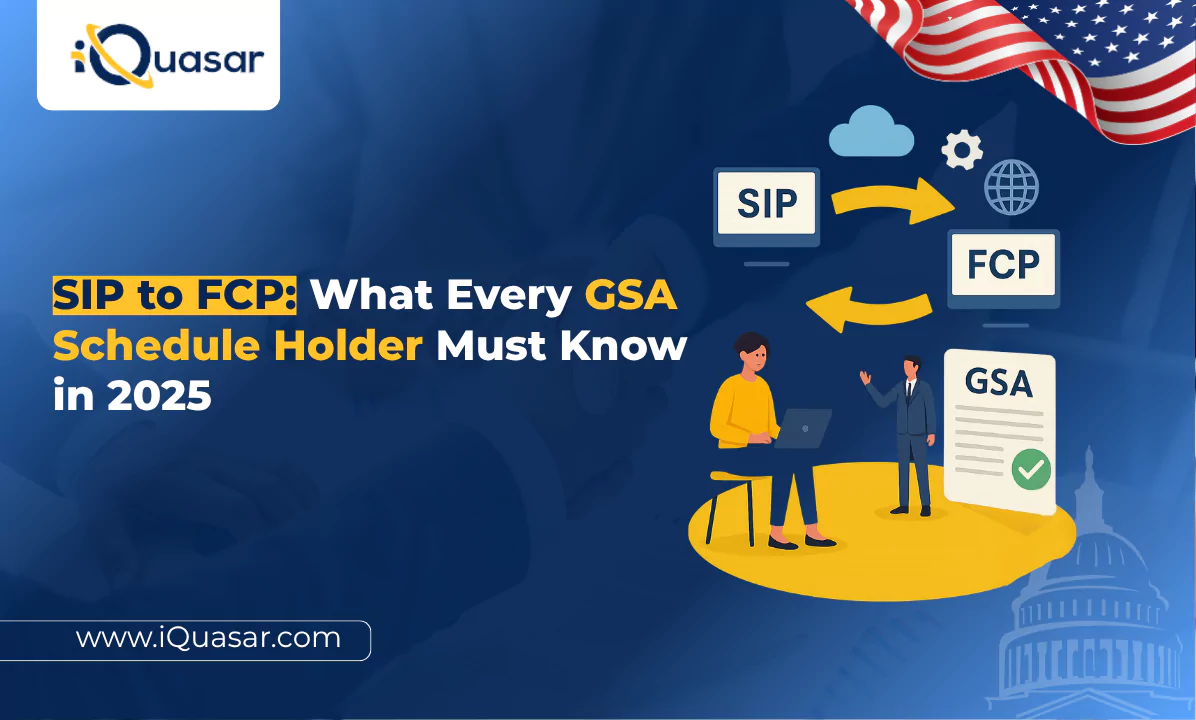
The U.S. General Services Administration (GSA) is in the midst of a sweeping modernization, transitioning all Multiple Award Schedule (MAS) contract holders from the legacy Schedule Input Program (SIP) to the new FAS Catalog Platform (FCP). As of mid-2025, this transition is well underway and carries significant implications for every GSA Schedule holder. Here’s what you need to know about the current state of the transition, its impact, and the steps you need to take.
What Is the SIP to FCP Transition?
For decades, SIP has been the primary tool for uploading and managing catalog data on GSA Advantage, but it’s outdated and cumbersome. The FAS Catalog Platform (FCP) is a web-based, modern platform that centralizes catalog management and integrates it with the eMod portal, streamlining the process for managing product and service offerings, contract modifications, and compliance requirements. The goal is to improve data accuracy, reduce manual errors, and simplify the user experience for contractors.
Progress So Far in 2025
- Phased Rollout: The FCP transition began with pilots in 2023, expanded in late 2023, and after a pause in June 2024, resumed in early 2025. GSA is now moving contracts in batches of about 500 each month. Learn more about the rollout.
- Scope: As of early 2025, FCP supports both product and service contracts, with new enhancements allowing service vendors to participate. However, most service-only and mixed contracts are scheduled to transition later in FY2025 or beyond. See eligibility details.
- Eligibility and Notification: GSA is sending out transition notices via email, titled “Important information about moving to FCP.” These notifications will continue throughout 2025 as the transition expands.
- Limitations: Some contracts—such as those with Zonal Pricing, 4PL SIN, or certain BPAs—cannot move to FCP until additional functionality is added.
What Does This Mean for Schedule Holders?
End of SIP and EDI:
Once transitioned, you will no longer use SIP or EDI for catalog updates. All catalog management will occur through FCP, making the process more efficient and user-friendly. See how FCP streamlines catalog management.
Streamlined Catalog and Modification Management:
FCP integrates catalog updates and contract modifications, reducing administrative burden and the risk of errors. Catalog changes are automatically published to GSA Advantage, saving weeks of processing time.
Baselining Requirement:
Before transitioning, you must complete a “baselining” process—verifying that all approved products and services are accurately reflected in FCP. This ensures your catalog is current and compliant before going live on the new platform. Read about the baselining process.
Expanded Support for Services:
While the initial focus was on product contracts, FCP now supports service contracts, particularly those under Transactional Data Reporting (TDR). Service vendors should monitor for eligibility and prepare for the transition in fiscal year 2025 or later. Get the latest on service support.
Ongoing Compliance:
The transition does not change your underlying MAS obligations. You must still ensure timely catalog updates, accurate pricing, and compliance with all contract terms.
Impact on Your Operations
- Efficiency Gains: The FCP’s web-based interface is more intuitive and less error-prone than SIP, saving time and reducing the learning curve for staff. See FCP’s features.
- Integrated Workflows: Catalog updates and contract modifications are managed in one place, streamlining compliance and reporting.
- Change Management: You’ll need to train your team on FCP and update internal processes. The initial baselining process may be time-consuming, especially for large or complex catalogs.
- Transition Timeline: GSA’s goal is to have all schedule holders transitioned to FCP by the end of fiscal year 2026, so planning ahead is critical. Transition timeline details.
Steps GSA Schedule Holders Need to Take Now
- Watch for GSA Notification: GSA will email you 60 days before your scheduled transition. Be alert for an email titled “Important information about moving to FCP”.
- Prepare for Baselining: Start reviewing your current catalog to ensure all products and services are accurately listed and compliant. This will ease the baselining process when your transition window opens.
- Register and Set Up in FCP: Once notified, register in FCP and update your Seller Profile. Make sure all company and contact information is current.
- Train Your Team: Ensure staff responsible for catalog management understand the FCP system and new workflows. Access FCP training resources.
- Update Internal Processes: Revise your standard operating procedures to reflect the new FCP requirements and workflows.
- Stay Compliant: Continue to meet all MAS requirements, including timely catalog updates, sales reporting, and adherence to contract clauses.
- Seek Support if Needed: Utilize resources from the Vendor Support Center and consider consulting with GSA specialists or third-party advisors if you need assistance.
The SIP to FCP transition is a pivotal modernization for GSA Schedule holders in 2025. While the transition requires preparation—especially for the baselining process and staff training—the long-term benefits include simplified catalog management, improved compliance, and greater efficiency. Watch for your transition notice, prepare your catalog, and embrace the FCP as the new standard for doing business with GSA. By staying proactive, you’ll ensure a smooth transition and continued success in the federal marketplace.
If you need help navigating the FCP transition, iQuasar’s GSA Schedule Consulting Services offer comprehensive support for application, modification, renewal, and ongoing compliance. With over 20 years of experience and a 97% customer satisfaction rating, iQuasar can streamline your GSA MAS processes and help you achieve your goals as a schedule holder. Reach out to iQuasar today to maximize your success in the federal marketplace.