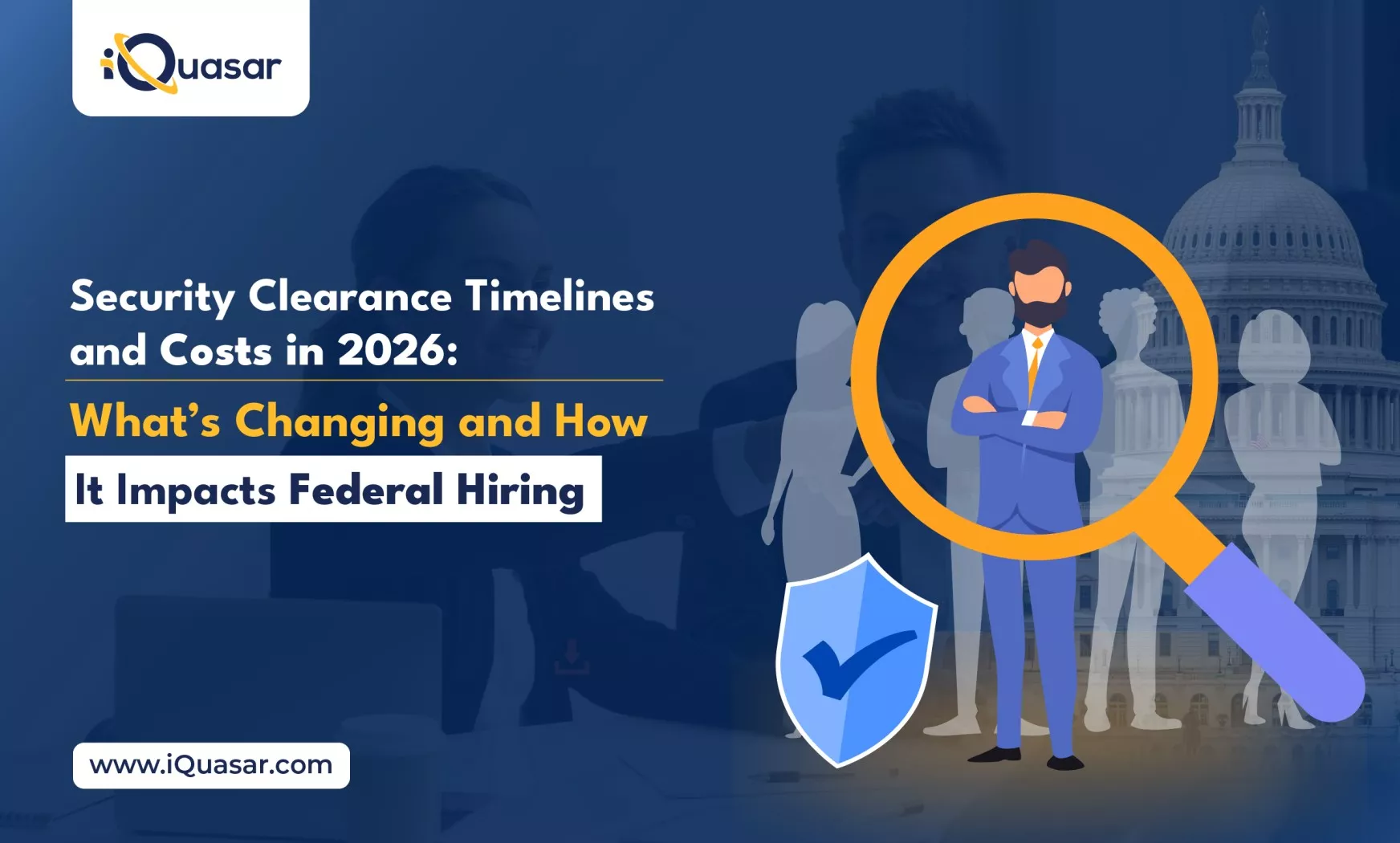
What will security clearance look like in 2026? Picture the industry’s crux: the mounting pressure to fill federal roles, volatile backlogs, and escalating competition for cleared candidates. Federal contractors know that understanding clearance timelines and costs in 2026 is no longer just HR trivia; it’s a mission-critical requirement. With modernizing reforms, new technology, and fee adjustments on the horizon, the landscape is shifting beneath their feet.
Why now? Federal hiring deadlines keep tightening while candidates hold out for better offers and faster onboarding. For anyone managing proposals, staffing pipelines, or contract performance, knowing precisely how clearance timelines and costs in 2026 will change is the key to outmaneuvering delays and costly surprises.
Current Clearance Processing Timelines
Before planning for the future, contractors need a factual baseline. The most recent public data (as of December 2025) shows some moderation in delays, but persistent pain points remain:
- Secret / Tier 3 Clearance: Average processing time ranges from 60 to 150 days. Factors include applicant completeness, agency workload, and reinvestigation cycles.
- Top Secret / Tier 5 Clearance: Timelines stretch to 120–240 days (calendar months in some cases), especially for high-interest roles or complex backgrounds. Periodic reinvestigations are increasingly managed by continuous vetting.
- TS/SCI with Polygraph (CI/Full Scope): These clearances, required for sensitive intelligence roles, often run from 180 to 365 days. The polygraph waitlist is now the main bottleneck for many agencies.
- Crossover Reciprocity: When a candidate already holds a clearance, crossover timelines are theoretically “fast” (30–75 days), but practical delays in document transfer and security file review can double this duration.
- Continuous Vetting: A major modernization win, contractors increasingly see reduced reinvestigation delays when candidates transition to continuous vetting programs.
Cost Factors Federal Contractors Must Plan For
Planning budgets for 2026 means drilling deep into what drives clearance cost escalation and volatility:
- Investigation Fees: Agencies publish annual fee structures (ODNI, DCSA, OPM), typically ranging from $200 to $800 per investigation for Secret, and above $3,000 for Top Secret or SCI investigations.
- Polygraph Exams: Required by the intelligence community (IC) and select DoD programs, polygraph costs can add $700–$1,200 per candidate, plus travel and accommodation for out-of-state applicants.
- Suitability Checks: Some roles require additional suitability investigations, especially for positions involving law enforcement, child care, or controlled substances. These may tack on $200–$400 per check.
- Timeline-Driven Cost Inflation: Delayed clearances mean prolonged labor costs, shifting bid assumptions, and expiring offer letters, often adding indirect costs above initial projections.
- Reprocessing and Upgrades: Upgrading from Secret to Top Secret, or reprocessing after a break in service, adds both administrative and investigation costs.
- Continuous Vetting Offset: By adopting continuous vetting, agencies and contractors often reduce reinvestigation costs and minimize lengthy interruption-driven delays.
How to Incorporate These Costs:
- Proposal Pricing: Include updated investigation and vetting fees, and account for delays in staffing models.
- Internal Budgeting: Allocate contingency based on expected clearance timelines per role.
- Subcontractor Negotiations: Ensure price assumptions and validity reflect 2026 federal fee guidance.
What’s Changing in 2026: Policies, Processes & Reforms
A wave of reforms is poised to transform clearance timelines and costs in 2026. Here’s what matters most for the next cycle of federal hiring:
Major Policy and Process Shifts
- Trusted Workforce 2.0 (TW 2.0) Full Transition: The federal government will complete TW 2.0 implementation, streamlining policy across DoD, IC, and civilian agencies. The goal is “clear once, trusted everywhere,” with accelerated reciprocity and reduced redundant investigations.
- eApp Replaces eQIP: The long-awaited launch of eApp marks a leap in digital form accuracy, pre-populated fields, and real-time error reductions. Expect faster submission cycles and fewer incomplete packages.
- Investigative Workflow Modernization: Agencies are deploying AI-assisted modeling, predictive analytics, and process automation, public documentation emphasizes improved risk flagging and batch processing, not wholesale replacements of adjudicators. Faster initial screenings, fewer bottlenecks for low-risk candidates.
- Expansion of Continuous Vetting: By 2026, almost all Tier 5/TS/SCI candidates will be in continuous vetting, slashing periodic reinvestigation timetables and providing real-time trigger alerts.
- Polygraph Scheduling Changes: Agencies are investing in broader exam capacity and exploring new triage methods, aiming to reduce the polygraph backlog for high-demand IC roles.
- Elimination of Redundant Suitability Checks: DoD and IC leaders, responding to government audits, are working to remove duplicative suitability cycles, making hires who clear elsewhere eligible for immediate onboarding.
- Interagency Reciprocity Legislation: Congress is pushing for stricter enforcement of reciprocity deadlines, attempting to limit “security freezes” between agency moves.
- OPM/NBIB Price Structure Adjustments: Cost schedules for investigations are expected to be updated, with new base rates for periodic reinvestigations and expanded continuous vetting coverage (details pending release in early 2026).
Key Takeaway: Every reform, from eApp innovation to TW 2.0’s “trusted everywhere” mantra, lowers barriers for contractors, but also demands agile adaptation of staffing and pricing processes. Staying ahead means watching federal notifications for breaking updates.
How Changes in 2026 Impact Federal Contractors
A. Workforce Planning
- Predictability: Contractors can forecast onboarding windows with greater confidence, especially for TS/SCI and linguist roles.
- Proposal Management: More accurate candidate timelines for strategic proposals, fewer “short notice” cancellations or extended pipeline delays.
- Talent Pipeline Strength: Continuous vetting lets recruiters keep candidates active, minimizing “clearance expired” risks.
Quick List:
- Improved timeline predictions for proposal windows
- Reduced onboarding volatility for recompete contracts
- Optimized candidate pipelines for hard-to-fill positions
B. Budget Forecasting
- Fee Anticipation: Use updated federal rates for investigative costs in proposal pricing.
- Timeline-Driven Salary Planning: Incorporate expected process lengths for labor budget models.
- Clearance Sponsorship Decisions: Analyze when to sponsor new clearances versus hiring already-cleared personnel.
Quick List:
- Integrate current OPM/DCSA costs into budget models
- Set reserve for reinvestigation and suitability fees
- Plan for indirect vacancy-driven cost overruns
C. Candidate Expectation Management
- Transparent Timelines: Communicate 2026 clearance milestones in offer and onboarding documentation.
- Polygraph & Vetting Guidance: Explain process changes, especially for IC and DoD candidates.
- Drop-Off Prevention: Set realistic expectations, reducing last-minute withdrawals.
Quick List:
- Build new candidate FAQ documents for 2026
- Train recruiters on process modernization
- Schedule proactive status updates during longer investigations
Also Read: How to Reduce Cleared Hiring Timelines Without Breaking Compliance Rules
D. Contract Execution
- Faster Staffing: Quicker onboarding yields better CPARS and contract outcomes.
- Surge Response: For urgent task orders, improved predictability in filling cleared roles.
- Competitive Post-Award Ramp-Up: Early visibility into timelines enhances win rates in competitive environments.
Thought Process Insight: Contractors must blend optimism about reforms with contingency plans for lingering bottlenecks, especially for roles requiring polygraph or interagency reciprocity.
Practical Guidance for Contractors Planning for 2026
- Update Pricing Models: Use newly published investigation and vetting costs for 2026, and build contingency for potential midyear fee changes.
- Build Updated Internal Guidance: Draft clearance process guides for recruiters, FSOs, and hiring managers based on revised timeline expectations.
- Refresh Candidate Communication: Revise onboarding, offer, and interview templates to reflect new stages, polygraph timing, and vetting cycles.
- Review Proposal Boilerplates: Ensure standard proposal sections reference accurate, current clearance timelines and fee structures.
- Strengthen Cleared Talent Pipeline: Proactively engage candidates with existing SCI/Poly clearances; develop strategies for pipeline maintenance.
- Adopt Clearance-Readiness Tools: Evaluate compliance-aligned software or process aides that speed candidate readiness, especially for eApp transitions and continuous vetting management.
What Contractors Should Watch in 2026
- Ongoing developments in reciprocity enforcement: Will new legislation finally clamp down on interagency stagnation?
- Updates to Tier 3/Tier 5 investigative models: Are new risk models affecting clearance throughput or scope?
- Fresh adjudication metrics from ODNI: Will standards change in response to workforce churn or security concerns?
- DoD/IC policy issuances: Monitor for new agency guidance on suitability, polygraph protocols, and screening practices.
- Industry-wide changes in polygraph scheduling capacity: Is the bottleneck ending for high-sensitivity programs?
Key Takeaway Box: Staying dynamic and informed is the linchpin for successfully navigating clearance timelines and costs in 2026. Set feeds for government announcements and build iterative processes for proposal, staffing, and pipeline management.
Clearance timelines and costs in 2026 are no longer background considerations—they directly shape hiring speed, proposal competitiveness, and contract performance. With Trusted Workforce 2.0, eApp, expanded continuous vetting, and updated fee structures taking hold, federal contractors must recalibrate workforce planning, pricing models, and candidate engagement strategies to avoid delays and budget overruns. Those who align early will gain predictability and resilience in an otherwise tight, cleared labor market.
If you’re planning for clearance timelines and costs in 2026, iQuasar’s team can help you stay ahead. Our Cleared Recruitment Services support federal contractors with clearance-aware hiring strategies, pre-vetted cleared talent pipelines, and realistic onboarding planning aligned with evolving federal processes. Contact us today to discuss how we can help you control clearance-related risk, accelerate hiring, and keep your programs fully staffed and mission-ready.