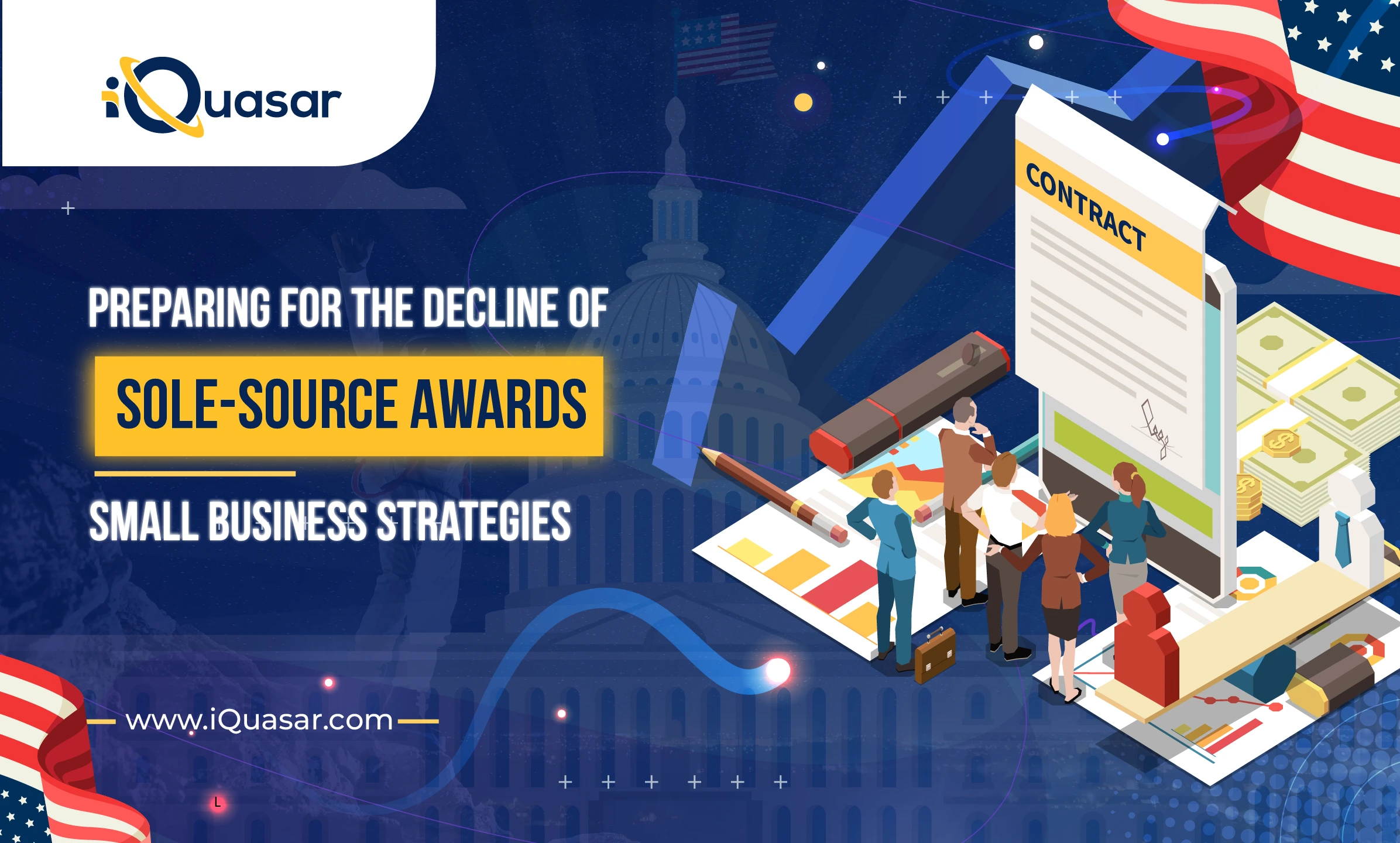
Federal small business contracting policy continues to evolve, and one noteworthy trend for small business contractors is the shift in use and availability of sole-source awards. Sole-source contracts have historically provided an essential pathway for certain small businesses to win federal work without full competitive processes. However, changes in regulation and procurement practices suggest that sole-source opportunities may be less frequent and more constrained in the future. Understanding these trends and preparing accordingly is crucial for small businesses to succeed in the federal marketplace.
Under federal procurement regulations, small business contracting can occur through set-aside competitions or sole-source awards. A sole-source award is a contract made without full and open competition, typically when only one responsible small business is available and capable of performing the requirement at a fair market price, and specific regulatory conditions are met. Agencies must first consider setting aside requirements for small businesses if at least two capable firms are reasonably expected to submit offers; only when this “Rule of Two” condition is not met can a sole-source award be considered.
For the SBA’s 8(a) Business Development Program, the Federal Acquisition Regulation and SBA regulations permit sole-source awards to qualifying 8(a) firms under defined thresholds, such as up to certain dollar amounts depending on the contract type and business status.
Regulatory and Policy Factors Influencing Sole-Source Decline
Several regulatory and procurement factors have contributed to a shift away from sole-source awards or a more limited role:
- Rule of Two and Competitive Set-Asides: The federal acquisition system generally requires contracting officers first to consider competitive set-asides for small businesses when at least two capable firms are expected to offer. This requirement reduces reliance on sole-source awards, allowing for the consideration of other potential small business competitors.
- Threshold Requirements for Written Justification: Regulations impose thresholds above which written justifications are required for sole-source awards. Over time, changes to these thresholds and documentation requirements (for example, amendments reflected in FAR updates) have added layers of scrutiny that can limit administrative use of sole-source procurement.
- FAR Modernization and SBA Engagement: Recent changes to the Federal Acquisition Regulation (FAR), including the 2025 overhaul, emphasize competitive small business participation and simplified procurement processes while preserving set-aside authorities. These reforms aim to strike a balance between accessibility and competition, which may, in practice, reduce the frequency of sole-source awards.
- Market Research and Documentation Standards: Procurement policy requires comprehensive market research before awarding set-asides or sole-source contracts. As agencies improve market research practices and ensure that at least two capable small businesses can perform the requirement, sole-source opportunities naturally diminish.
Broader Procurement Trends Affecting Sole-Source Opportunities
Beyond regulatory specifics, federal contracting trends point to broader pressures that can reduce sole-source awards for small firms:
- Federal data indicate a decline in the number of unique small business vendors receiving prime awards over recent years, even while total dollars to small businesses remain significant. This suggests a consolidation of awardees and potential contraction in direct award opportunities.
- Small business contracting goals and priorities, as outlined in SBA proposals to increase small business participation on multiple award contracts (MACs), indicate an emphasis on integrating small firms into broader competitive vehicles rather than relying solely on sole-source awards.
These trends, when combined with regulatory emphasis on competition, signal a less stable environment for sole-source awards than in earlier decades.
What the Decline of Sole-Source Means for Small Businesses
If your growth strategy relies heavily on sole-source awards, you may face:
- Longer sales cycles
- Higher proposal costs
- Increased competition from peers and mid-tier firms
- Greater emphasis on past performance, pricing, and differentiators
The upside? Firms that adapt early can gain a meaningful advantage.
Practical Strategies for Small Business Contractors to Combat Sole-Source Decline
Strategy 1: Shift from “Eligibility-Driven” to “Capability-Driven” Positioning
Set-aside eligibility alone is no longer enough.
Agencies are looking for:
- Demonstrated technical depth
- Proven delivery on similar scopes
- Clear value propositions beyond compliance
Action steps:
- Reframe your messaging from “we qualify” to “we outperform”
- Clearly articulate outcomes, efficiencies, and risk reduction
- Build solution narratives tied to agency mission priorities
Strategy 2: Invest Early in Capture, Not Just Proposals
As competition increases, winning starts well before the RFP.
Strong capture discipline includes:
- Early identification of upcoming recompetes
- Market research and customer intelligence
- Incumbent and competitor analysis
- Influencing requirements where appropriate
Small businesses that treat capture as a core function, not an afterthought, are far better positioned in competitive environments.
Strategy 3: Strengthen Past Performance Strategically
Past performance is becoming one of the strongest discriminators in competitive awards.
How to adapt:
- Be selective about bids, prioritize relevance over volume
- Actively manage CPARS and performance narratives
- Leverage subcontracting roles to gain experience on larger programs
- Map every opportunity to existing performance stories
Quality and relevance matter more than sheer contract count.
Strategy 4: Use Teaming and Partnerships Intentionally
As competition rises, strategic teaming becomes essential.
Instead of reactive partnerships:
- Form long-term alliances aligned with your growth goals
- Target primes or peers that complement, not duplicate, your strengths
- Use teaming to enter new agencies, contract vehicles, or technical domains
Smart teaming can offset gaps in scale, past performance, or pricing.
Also Read: Federal Contracting in 2026: Key Updates, Policy Shifts, and Market Trends
Strategy 5: Get on the Right Contract Vehicles Early
Many competitive opportunities now flow through pre-qualified vehicles. If you’re not on them, you’re not competing.
Key considerations:
- Evaluate which GWACs, MACs, and agency vehicles align with your core offerings
- Plan for on-ramps well in advance
- Invest in compliance, pricing, and readiness, not just access
Vehicle strategy is now a growth strategy, not an administrative task.
Strategy 6: Sharpen Pricing and Cost Realism
Competitive procurements put pricing under a microscope.
To stay competitive:
- Understand your true cost structure
- Develop repeatable pricing models
- Balance competitiveness with sustainability
- Prepare for cost realism and tradeoff evaluations
Winning low doesn’t help if delivery erodes margins or performance.
Strategy 7: Build a Long-Term Pipeline Mindset
The decline of sole-source awards makes pipeline discipline non-negotiable.
That means:
- Tracking opportunities 12–36 months out
- Diversifying across agencies and contract types
- Balancing near-term wins with long-term positioning
Predictable growth now comes from systems, not shortcuts.
Understanding the regulatory context and procurement trends enables small firms to position themselves more effectively in the federal marketplace, even as sole-source opportunities evolve. While official rules still permit sole-source awards in certain situations, agencies are increasingly emphasizing competition and market research, which may reduce the frequency of such awards. Small businesses should plan accordingly and invest in strategies that position them well for both competitive and direct award opportunities under the current federal procurement policy.
As sole-source awards become less predictable, small businesses need more than eligibility; they need defensible positioning and audit-ready certifications. iQuasar supports federal contractors across the full lifecycle of small business certifications, including SBA 8(a), SDVOSB, WOSB/EDWOSB, HUBZone, and other socio-economic programs. Our support goes beyond applications, helping firms align certification strategy with competitive readiness, compliance, and long-term growth. In an increasingly competitive environment, knowing how to leverage and defend your certifications is critical to sustaining federal success.