Imagine unlocking the doors to exclusive business opportunities, achieving competitive advantages, and amplifying the reliability and credibility of your company, all with a single certification. For small businesses owned by individuals from minority communities, MBE certification is not only a simple title. It is a means that can turn challenges into growth opportunities.
Ready to explore how this certification can improve your business?
What is the MBE Certification?
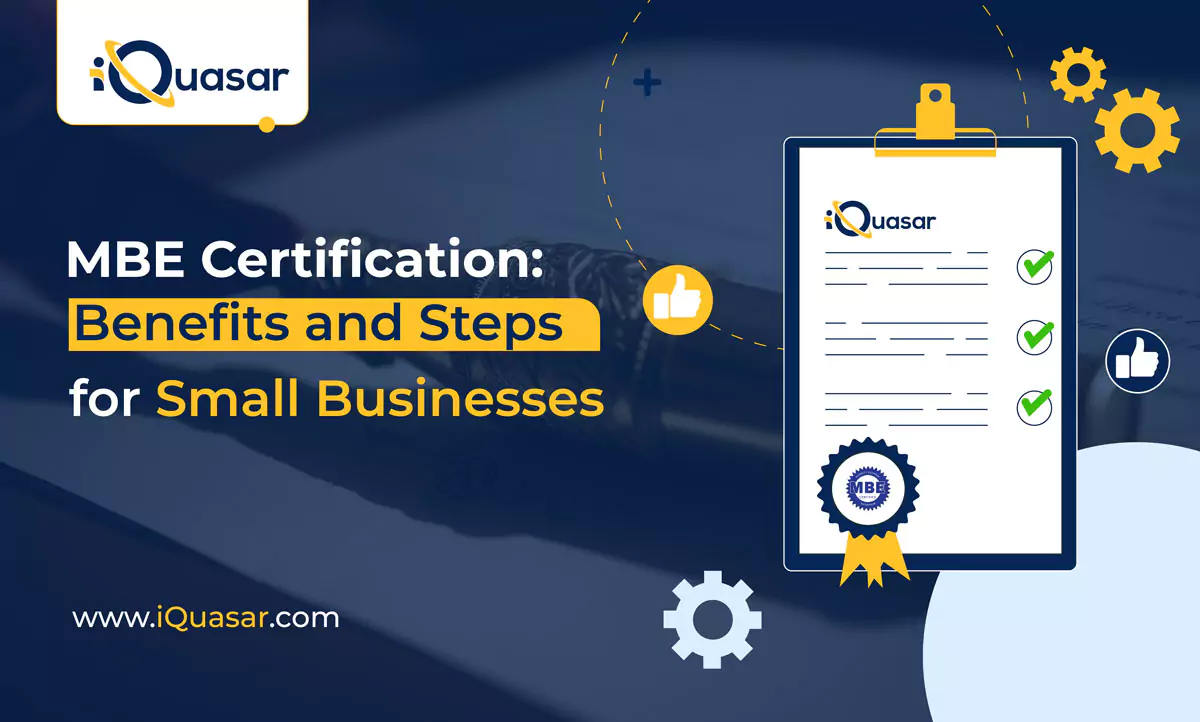
A Minority Business Enterprise (MBE) is a certified for-profit business owned and controlled by one or more minorities. A qualified “minority” group or member is a U.S. citizen who is at least 25% Asian Indian, Asian-Pacific, Black, Hispanic, or Native American. Minority eligibility is established via a combination of document reviews, screenings, interviews, and site visits. Ownership, in the case of a publicly owned business, means that at least 51% of the stock is owned by one or more qualified minority group members.
A Minority Business Enterprise (MBE) certification identifies businesses largely owned, controlled, and operated by individuals belonging to specific minority groups. The MBE certification is awarded on a state or local level, making it more accessible for businesses operating predominantly within those jurisdictions. By earning a minority business enterprise certification, your business can gain access to financial benefits and a network of corporations that you can build relationships with.
What are the benefits of MBE Certification?
- Enhanced Market Recognition: An MBE status enhances and amplifies your business and increases its visibility in the marketplace. This boosts your business’s credibility and reputation. It becomes very easy for potential partner-seeking entities with minority businesses to identify and find you through this certification.
- Access to Exclusive Contracts: Various state and local government agencies reserve a portion of their contracts only for MBE-certified enterprises. This assures that minority enterprises not only participate but also have an equal chance to compete. This direct access offers MBE enterprises a significant advantage in the solicitation process.
- Networking Connections: Receiving an MBE accreditation enables you to access special platforms and events intended for minority businesses. Such events, which range from networking seminars to workshops, are excellent chances for you to network, tap into the expertise of business executives, and possibly discover new customers or partners.
- Financial Assistance: MBE-certified businesses are eligible for financial incentives in some states and certain fields. These advantages which sometimes include tax discounts or other financial aids and schemes help minority businesses to remain stable and expand. When it comes to growth, financial investments, or even everyday operating expenses, this kind of financial support can make all the difference.
- Training & Development Resources: MBE certification provides valuable training programs, mentorship, exclusive opportunities, and market insights to ensure continuous growth and competitiveness. These resources can help your minority firm not only sustain its operations but also excel by overcoming challenges and staying ahead of market trends.
Who is Eligible for MBE Certification?
Businesses that meet the following criteria are eligible to apply for MBE certification:
- Ownership & Control: Ensure that the minority owner is a U.S. citizen or lawfully admitted permanent resident of the U.S. The owner must own at least 51% of the business and the ownership interest must be considered equitable in nature. You must also be able to prove that ownership is not a sham or shell for an entity that is not owned or controlled by minorities. If a minority acquired ownership by gift or transfer, they must demonstrate that the intent for the gift or transfer is not for the purpose only of obtaining MBE certification.
- Structure: Your business must be organized as a for-profit entity and may be organized as any traditional legal structure, including sole proprietorships, partnerships, limited liability companies, and corporations. The business must be independent and may not be owned or controlled by a parent company or similar structure that does not qualify for MBE certification.
- Operations: Your business must have been in operation for a minimum time, (typically one year), before qualifying for MBE certification.
What are the Steps for applying for MBE Certification?
1. Gathering Required Documents
- Basic Business Information: Basic business information must include contact information, status as prime or subcontractor, and industry type using the NAICS code. A narrative of the history of your business is typically required.
- Corporate Governance: Corporate governance documentation typically includes documentation related to formation, structure, ownership, and control, including business licenses, tax identification numbers, permits, and relevant licensure. You may be required to provide a copy of the minute book, corporate resolutions, and significant agreements.
- Financials: Financial information includes the basic financial statements, projected revenues up to three years, and bank authorization or signatory cards.
- Business Operations and Expertise: You will need to provide significant documentation evidencing current operations and expertise in the relevant business industry, typically including a resume, business plan, list of references, list of directors, officers, and managers, and a list and description of business activities, investment,s and relationships.
- Client Information: Required client information typically includes a list of major clients; details of key projects or transactions and client contact information.
- Individual Owner Information: Individual owners must provide basic contact information, and in-depth financial information, typically in the form of a personal financial statement disclosing information related to assets, liabilities income, and potential conflicts of interest. Notarized affidavit or declaration page. Proof of U.S. citizenship or residency (e.g., passport, birth certificate). Proof of minority status (e.g., birth certificate).
2. Choose a Certifying Agency
You can apply through the National Minority Supplier Development Council (NMSDC) or local MBE programs administered by cities, counties, or states. Each has its own process and requirements.
3. Submit Application
After registering on the certifying agency’s website and completing the online application, your application will be reviewed by certification staff, followed by a site visit to verify the business operations. MBE certification typically lasts for one year and requires annual renewal through a recertification application
MBE certification is a strategic advantage that helps minority-owned companies increase their market presence, provides exclusive contract opportunities, offers financial support and establishes valuable network connections. If you are a minority business owner seeking to develop and access new opportunities, plan to request MBE certification today. Take the first step by searching for your state certification process and gathering the necessary documents. At iQuasar, we specialize in helping minority business owners apply for MBE certifications, freeing them up from the burden of working on the application all by themselves, reach out to us for guidance on how to submit a successful MBE certification application.