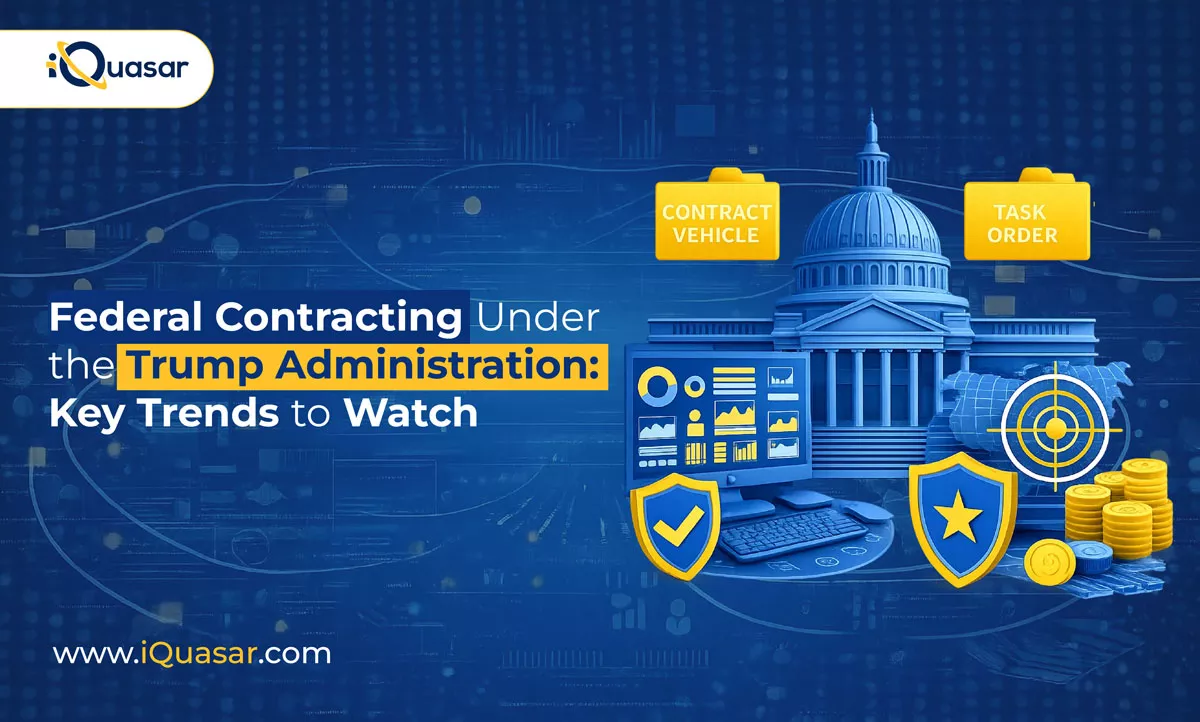
The prospect of a Trump administration returning to office has prompted renewed scrutiny across the federal contracting ecosystem. While campaign rhetoric often dominates headlines, experienced government contractors understand that the more consequential impacts emerge through procurement policy shifts, budget priorities, and agency-level behavior.
A second Trump administration would likely accelerate trends already familiar to the GovCon community: heightened cost scrutiny, reduced emphasis on certain socio-economic preferences, increased reliance on existing contract vehicles, and a sharper focus on performance and mission outcomes. Firms that proactively adapt their strategies will be better positioned to compete, regardless of the level of political uncertainty.
1. Procurement Philosophy: Cost, Speed, and Performance First
A defining characteristic of the previous Trump administration was a strong preference for efficiency-driven procurement. Agencies were encouraged to reduce acquisition timelines, limit administrative complexity, and emphasize best-value determinations rooted in measurable performance rather than expansive narrative proposals.
If this approach returns, contractors should expect:
- Increased use of streamlined solicitations
- More LPTA or price-sensitive best-value tradeoffs
- Less tolerance for speculative or unsubstantiated technical claims
For proposal teams, this reinforces the need for concise, evidence-based responses that clearly demonstrate past performance relevance, cost realism, and execution capability.
2. Socio-Economic Programs: Legal Continuity, Practical Recalibration
Small business and socio-economic programs are codified in statute and unlikely to be eliminated outright. However, prior experience suggests agencies may recalibrate how aggressively they use these programs, particularly where they are perceived to constrain competition or increase costs.
Potential shifts include:
- Reduced reliance on discretionary set-asides
- Greater scrutiny of eligibility, ownership, and control
- Preference for open competition when mission risk is high
For firms participating in 8(a), HUBZone, SDVOSB, or WOSB programs, certification compliance and demonstrable capability will matter more than program status alone. Set-aside eligibility may open doors, but performance credibility will increasingly determine award outcomes.
3. Consolidation of Contract Vehicles and Vendor Pools
Another likely trend is the consolidation of contract vehicles, with expanded use of established government-wide acquisition contracts (GWACs), IDIQs, and multiple-award schedules. Agencies may favor vendors already on contract vehicles to minimize procurement lead times and administrative burden.
Implications for GovCon firms include:
- Higher barriers to entry for firms not already positioned on key vehicles
- Increased importance of on-ramp strategies and teaming arrangements
- Intensified competition within existing IDIQ pools
Firms should assess vehicle coverage gaps now and develop clear plans for access through primes, joint ventures, or future on-ramps.
4. Agency Budget Priorities will diverge sharply
While overall federal spending may remain strong, allocation patterns are likely to shift. Historically, a Trump administration emphasized defense, border security, energy independence, and infrastructure, while placing pressure on civilian agency discretionary spending.
Contractors should anticipate:
- Growth opportunities in DoD, DHS, and national security-adjacent agencies
- Budget uncertainty for social programs, research grants, and some civilian initiatives
- More frequent recompetes and scope reductions in cost-constrained agencies
Diversification across agencies and funding sources will be critical to managing portfolio risk.
Also Read: Top 5 Contract Vehicles to Pursue in 2026
5. Compliance and Oversight: Less Policy, more Enforcement
A reduced emphasis on new regulatory frameworks does not equate to relaxed enforcement. Past trends indicate strong interest in audit readiness, contract compliance, and fraud prevention, particularly for small business programs and cost-reimbursable contracts.
GovCon firms should prioritize:
- Internal controls and documentation discipline
- Audit preparedness for FAR, SBA, DCAA, and agency IG reviews
- Clear separation between marketing claims and contractual deliverables
Operational maturity will increasingly differentiate successful contractors from those reliant on aggressive positioning.
What GovCon Leaders Should Do Now
Rather than reacting to political developments, firms should focus on controllable fundamentals:
- Strengthen proposal quality with clear win themes tied to mission outcomes
- Validate certifications, joint ventures, and subcontracting structures
- Reassess pricing strategies for a more cost-sensitive environment
- Build past performance narratives that withstand increased scrutiny
- Invest in capture planning earlier in the acquisition lifecycle
The federal marketplace rewards preparation and adaptability more than political alignment.
Preparing for Policy Shifts without Overreacting
As federal acquisition priorities evolve, many firms will need to reassess their capture strategies, proposal approaches, compliance posture, and contract vehicle positioning. Navigating these shifts requires not only awareness of policy direction but also disciplined execution across business development, pricing, and operational readiness.
iQuasar helps government contractors to evaluate their current federal market positioning and align strategies with changing procurement realities. Through advisory support spanning business development, proposal development, compliance readiness, and contract vehicle strategy, our team assists firms in proactively adapting rather than reacting in an increasingly performance-driven federal marketplace. If you and your team need any assistance in any area of your government contracting journey, feel free to get in contact with our experts!