Category management has evolved from an Office of Management and Budget (OMB) procurement initiative into a central operating model for federal acquisition strategy. In FY2026, agencies continue to direct a larger share of procurement spending through structured contract vehicles, with significant implications for how contractors position, compete, and grow within the federal marketplace.
For contractors, access to the right contract vehicles increasingly determines their opportunities and long-term market visibility.
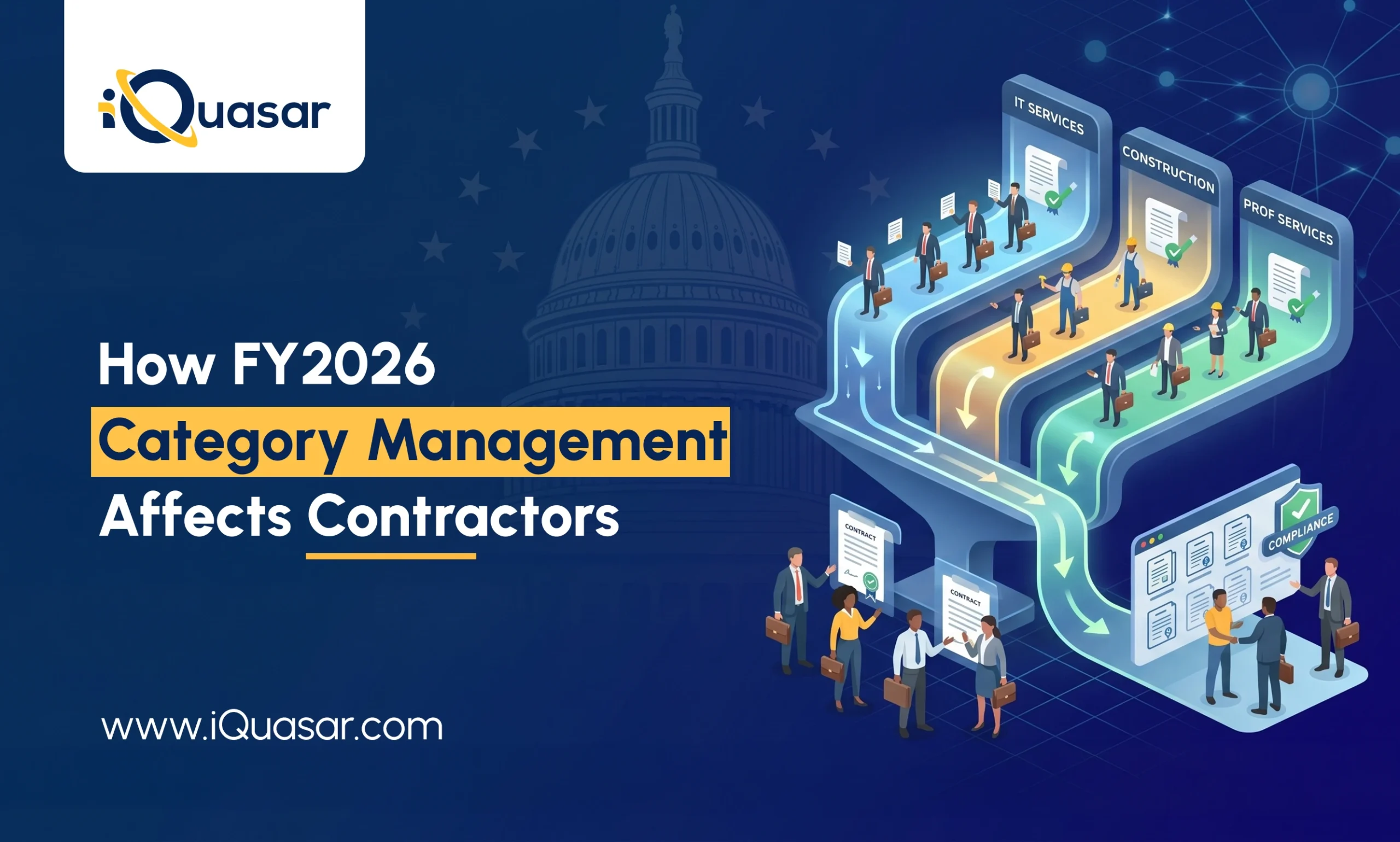
What began as an OMB policy initiative in 2014 has evolved into a central framework influencing how agencies plan, manage, and execute procurement strategies across government. The goal is straightforward: consolidate spending across major categories such as IT, professional services, human capital, logistics, and other procurement areas through shared, pre-vetted contract vehicles rather than hundreds of fragmented agency-specific contracts.
The Framework: BIC Vehicles and Spend Under Management
At the center of category management is Spend Under Management (SUM), the share of federal spending flowing through structured contract vehicles. OMB ranks procurement vehicles across four tiers, with Tier 3 Best-in-Class (BIC) representing governmentwide solutions designated as preferred acquisition channels.
| Tier | Description | Contractor Impact |
|---|---|---|
| Tier 0 | Unmanaged spend | Limited strategic significance |
| Tier 1 | Basic spend management | Moderate impact |
| Tier 2 | Agency-managed solutions | Increased opportunity |
| Tier 3 (BIC) | Governmentwide preferred solutions | Highest concentration of opportunity |
As of December 2024, OMB designated approximately 40 acquisition vehicles as Best-in-Class across IT, professional services, logistics, and other categories. Agencies continue to emphasize SUM objectives, contributing to more procurement activity being routed through structured acquisition channels and to reduced reliance on open-market procurements for common requirements.
For a full breakdown of how GWACs, IDIQs, and MACs fit into this structure, read: Government Contracting Vehicles: How GWACs and IDIQs Are Reshaping Federal Acquisition.
What’s Different in FY2026
Several developments are shaping the category management landscape this year:
- Agencies continue to place greater emphasis on using designated contract vehicles. In many procurement categories, acquisition teams increasingly require additional acquisition rationale when alternative procurement approaches are used. This creates additional friction for standalone procurement efforts and reduces open-market opportunities for commonly acquired products and services.
- OASIS+ continues to expand as one of GSA’s flagship professional services acquisition solutions, with broader service domains and multiple socioeconomic pools. It is becoming a major acquisition channel for professional services requirements across the federal marketplace. Additional insights on this evolving vehicle can be found in iQuasar’s analysis: OASIS+ Contract Vehicle: Why It’s Becoming Dominant.
- IT consolidation also continues to accelerate. Procurement strategies increasingly direct technology spending through major GWACs and governmentwide acquisition solutions such as CIO-SP4, Polaris, and Alliant vehicles.
- Regulatory changes are also occurring in parallel. Initiatives such as the FAR Simplification Initiative and GSA MAS Refresh #30 updates continue affecting contractor compliance obligations and procurement requirements.
Emerging FY2026 Procurement Trends
Additional developments influencing acquisition strategy include:
- Increased emphasis on AI governance and responsible contractor use of artificial intelligence
- Greater cybersecurity and CMMC integration requirements
- Supply chain transparency expectations
- Increased use of procurement analytics and acquisition data tools
- Continued modernization of acquisition policies and reporting requirements
The Real Impact on Contractors
Contractors without positions on major acquisition vehicles may experience reduced visibility and fewer opportunities to compete as spending consolidates into managed channels. Task orders under many BIC vehicles are completed only among vehicle holders. Without access to these vehicles, firms may lose opportunities regardless of capabilities, clearances, or existing agency relationships.
While dedicated socioeconomic pools create access opportunities, qualification alone rarely guarantees competitiveness. Firms increasingly need operational maturity and differentiated positioning strategies. Major vehicles such as OASIS+, CIO-SP4, and Polaris include dedicated set-aside pools for:
- 8(a)
- WOSB
- HUBZone
- SDVOSB
- Small Disadvantaged Businesses
However, eligibility alone rarely creates sustainable competitive advantage. Successful firms increasingly differentiate through:
- Relevant CPARS history
- Prime/subcontractor relationships
- Mentor-Protégé participation
- Pricing maturity
- Staffing infrastructure
- Capture readiness
- Agency relationships
- Contract execution quality
Traditional approaches centered primarily on responding to open-market solicitations may become less sustainable as agencies increasingly rely on established contract vehicles. Many successful firms have shifted from reacting to individual opportunities toward making long-term investments in vehicle access and market positioning.
What Contractors Should Do Now
1. Get on the Right Vehicles
The highest-priority vehicles for FY2026 include:
- OASIS+ — Professional services vehicle with multiple socioeconomic pools
- CIO-SP4 / Polaris — IT-focused GWACs with small business opportunities
- Alliant vehicles — Enterprise IT acquisition solutions
- GSA MAS — Common entry point for many federal contractors
- Agency-specific IDIQs — Increasingly aligned with category management objectives
See the full priority breakdown: Top 5 Contract Vehicles to Pursue in 2026.
2. Build Past Performance Strategically
Past performance and demonstrated experience remain among the most heavily weighted evaluation factors across government-wide acquisition vehicles and large IDIQ programs. If your firm does not currently possess experience within a target category, consider building that experience through subcontracting with established primes, GSA Schedule task orders, mentor-protégé arrangements, or targeted small-business opportunities before future on-ramp windows open.
Executing that work often requires access to qualified personnel, scalable recruiting capabilities, and workforce planning strategies that support growth objectives.
3. Invest in Teaming and Capture Discipline
For firms not yet on a target vehicle, teaming — through subcontracting, joint ventures, or SBA Mentor-Protégé arrangements — is the primary path to access. And for firms already competing, strong capture discipline is what separates vehicle holders who win task orders from those who don’t.
4. Strengthen Compliance and Contract Execution
BIC vehicles carry data sharing, pricing transparency, and FAR/DFARS compliance obligations. Contractors managing multiple task orders across agencies need a robust contract management infrastructure to perform consistently and protect their CPARS ratings.
Contractor Action Checklist
Immediate actions for FY2026:
✓ Evaluate current contract vehicle positions
✓ Identify upcoming on-ramp opportunities
✓ Assess CPARS and past performance gaps
✓ Develop strategic teaming relationships
✓ Review compliance readiness
✓ Build a multi-year vehicle capture strategy
✓ Align staffing capabilities with target vehicles
The Bottom Line
As category management shifts federal procurement toward structured acquisition channels, contractors must invest early in vehicle strategy, capture discipline, and operational maturity to secure a long-term advantage.
iQuasar directly aligns your organization with these evolving demands, driving sustainable growth through:
- Capture & Proposal Strategy: Targeted capture management, opportunity qualification, and Shipley-based proposal development to maximize win probability.
- Vehicle Positioning & Compliance: Strategic on-ramp planning and robust contract management to navigate strict federal oversight.
- Workforce Readiness: Cleared recruitment solutions and dynamic staffing/workforce planning to scale your team quickly upon contract award.
- Long-Term Growth: Forward-looking federal growth planning to ensure your business remains competitive and resilient.
Also Read: Government Contract Management: What Winning Contractors Know
Frequently Asked Questions
Q: What is Spend Under Management? SUM is the percentage of federal spending flowing through managed contract vehicles (Tiers 1–3). As agencies push more spending into these tiers to meet OMB goals, contractors without vehicle positions lose access to a growing share of the market.
Q: Can small businesses compete for BIC vehicles? Yes, most major BIC vehicles include dedicated small-business pools. However, successful participation often depends on demonstrated past performance, operational maturity, and compliance readiness.
Q: How is OASIS+ different from the original OASIS? OASIS+ expands on the original OASIS program by offering broader service domains, multiple socioeconomic pools, and updated acquisition approaches intended to provide agencies with greater flexibility. Full breakdown: OASIS+ Contract Vehicle: Why It’s Becoming Dominant.
If your organization is looking to strengthen its foothold in the federal marketplace as category management continues to reshape procurement, iQuasar is here to help. Our team works with federal contractors to build smarter capture strategies, pursue the right contract vehicles, and craft compelling proposals that drive consistent wins. Reach out to us today to start building your FY2026 positioning strategy.