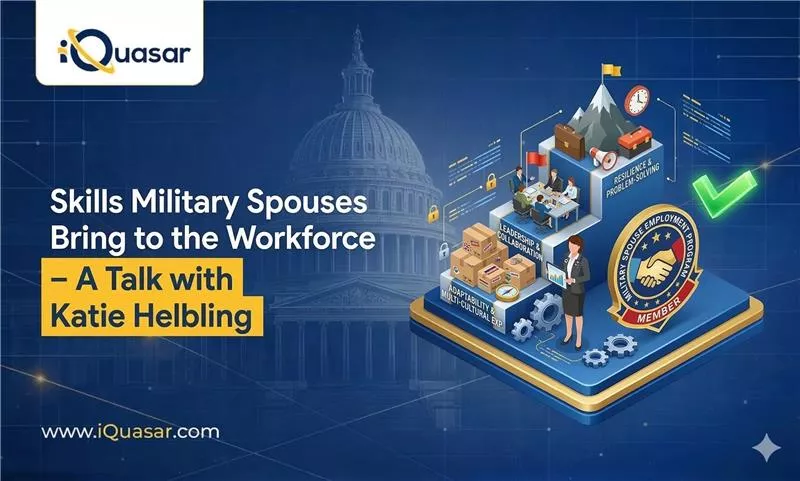
They are the masters of the “pivot,” the architects of community in new cities, and the ultimate problem-solvers under pressure. While a resume might show a series of moves, the reality is that military spouses possess a high-octane skill set that is tailor-made for the modern, fast-paced workforce.
Today, we’re sitting down with Katie Helbling from ClearanceJobs to peel back the layers on “The Skills Military Spouses Bring to the Workforce.” We’re diving into why these professionals are a competitive advantage for any company and how we can better translate their unique experiences into career gold.
Shoaib: Thanks for joining us today, Katie. My first question is: when you think of the “typical” military spouse resume, what’s the one superpower you see hidden between the lines?
Katie:
When I look at a military spouse’s resume, the superpower I almost always see hiding in plain sight is resilience paired with resourcefulness. A resume might show multiple moves or short roles, but what it really reflects is someone who has repeatedly rebuilt networks, learned new systems quickly, and found ways to contribute in completely new environments. That ability to step into the unknown, assess what’s needed, and get things done, often without much onboarding or training, is incredibly valuable in today’s workforce. Military spouses become experts at figuring things out quickly and delivering results regardless of the circumstances.
Shoaib: I like how you put it. Another aspect of it, which my second question is about, is how you explain the value of “extreme adaptability” to a hiring manager who might only see a history of frequent moves?
Katie:
This is a big challenge, I hear, when military spouses are starting the job search. But I like to reframe it by saying that military spouses don’t stop at adapting; they actually accelerate into new environments. Every move means learning a new community, new organizations, new professional expectations, and often a new job market. Instead of seeing frequent moves as instability, I encourage hiring managers to see them as proof that this person can quickly onboard themselves, integrate into teams, and remain productive despite change. In a world where companies constantly pivot, reorganize, and evolve, that kind of adaptability is a competitive advantage.
Shoaib: Makes sense. And you know, beyond just “checking boxes”, what unique perspective do military spouses bring to a team’s culture or problem-solving style?
Katie:
Military spouses tend to bring a community-first mindset to teams, which I truly appreciate. They’re used to stepping into unfamiliar situations and figuring out how to connect people, build support systems, and solve problems collaboratively. That often translates into strong emotional intelligence, inclusivity, and a willingness to jump in wherever help is needed. They’re also incredibly creative problem-solvers because they’ve had to navigate challenges with limited resources, tight timelines, and with little support. That perspective can really strengthen team culture and help organizations approach problems from new angles.
Shoaib: What is the biggest myth about military spouse employment that you’re personally on a mission to debunk?
Katie:
There are….lots, unfortunately. A big one is that hiring a military spouse is a short-term investment. The reality is that many spouses are deeply committed professionals who want to grow with an organization. With the rise of remote work and more flexible employment models, companies can retain military spouse talent even through moves. What employers often discover is that military spouses are incredibly loyal employees because they value the organizations that invest in them.
Also Read: Cleared, Capable, and Onboarded: How We Filled Cleared Technician Roles
Shoaib: Final question – if you could give one piece of advice to a spouse trying to translate their “volunteer and move” life into corporate speak, what would it be?
Katie:
Don’t underestimate the leadership and operational skills you’ve developed along the way. Own your journey and exude that confidence. Volunteer work, community leadership, and managing transitions often involve project management, event planning, stakeholder coordination, budgeting, communications, and, I’m sure, an elephant’s weight in patience. The key is to translate those experiences into the language employers recognize. So, focus on outcomes, scale, and impact. Instead of saying you volunteered, talk about the initiatives you led, the people you coordinated, and the results you achieved. Those experiences absolutely count, and they often demonstrate leadership in ways traditional roles don’t.
Conclusion: Bridging the Gap
As Katie highlighted, hiring a military spouse isn’t just a gesture of support – it’s a savvy business move. Their resilience, adaptability, and cross-functional expertise are exactly what today’s global market demands.
At iQuasar, we don’t just recognize this talent; we actively seek it out. We are proud to be a member of the Military Spouse Employment Partnership (MSEP). and committed to connecting military spouses with meaningful career opportunities that match their incredible skill sets. Are you a military spouse looking for your next career move? Check out our current openings and let’s put your superpowers to work. Are you an employer looking to hire military spouses? Reach out to us today.

About Katie:
Katie Helbling is an experienced, cleared recruitment and hiring professional specializing in the Department of Defense and Intelligence Community industries. She navigates the security clearance and hiring processes adeptly, offering valuable insights and professional tips. Currently, she works as Content Marketing Manager at ClearanceJobs, focusing on blogging, technical recruiting, marketing, outreach, and communications.