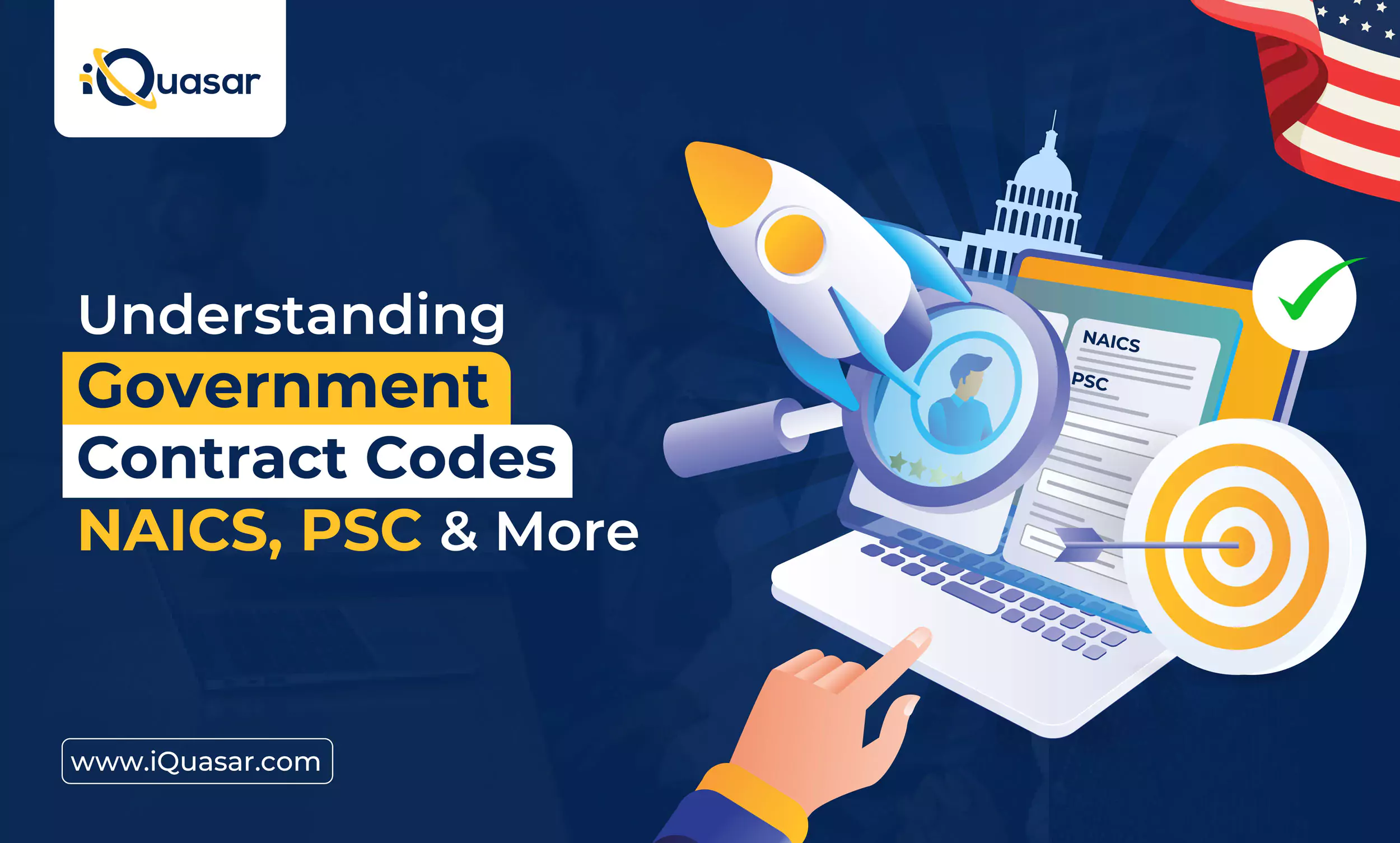
In the world of federal contracting, the first step to winning opportunities isn’t just knowing what you offer — it’s knowing how to be found. Government contract codes like NAICS, PSC, and FSC are a standardized classification system used by federal agencies to categorize contracts based on industries, products, and services. These codes play a vital role in helping businesses identify and filter relevant contract opportunities on platforms like SAM.gov and USASpending.gov. Whether selling cybersecurity services or construction materials, these codes determine visibility and eligibility of the contractors in a highly competitive marketplace.
Understanding them isn’t optional; it’s contractors’ gateway to unlocking federal contracts, standing out to government buyers, and positioning businesses for long-term growth. Without the correct NAICS and PSC codes assigned, businesses might miss out on solicitations, and agencies might struggle to reach qualified vendors. This blog explores the world of government contracting codes and how you can use them to your advantage.
What are Government Contract Codes?
Government contract codes are the classification system the U.S. government uses to categorize businesses, products, and services when awarding contracts. These codes — like NAICS (North American Industry Classification System) and PSC (Product Service Codes) — help federal agencies quickly identify qualified vendors for specific needs. These codes ensure that both the government and potential vendors speak the same “language” when matching needs to capabilities.
For businesses, understanding and correctly using these codes is essential, as they directly influence your visibility in procurement databases and your eligibility for opportunities. From small business set-asides to full-scale competitive contracts, these codes shape how and where your business can compete in the federal marketplace, making them a vital part of any government contracting strategy.
Also Read: Hidden Government Contracting Opportunities: Using NAICS Codes Beyond SAM.gov
Types of Government Contract Codes
NAICS (North American Industry Classification System):
NAICS codes, a six-digit code that helps federal agencies and contractors identify the type of goods or services a business provides. For example, 541512 represents Computer Systems Design Services, commonly used by IT consulting firms bidding for government contracts.
PSC (Product Service Codes):
Product Service Codes (PSC) are used to describe the specific products or services being purchased by the federal government. While NAICS focuses on industry, PSC focuses on the nature of the deliverable. For instance, D302 is the PSC code for “IT and Telecom — Systems Development,” guiding agencies to software development providers.
FSC (Federal Supply Classification):
FSC codes are a subset of PSC codes that categorize physical products used in logistics, procurement, and defense. They are particularly common for hardware and tangible supplies. For example, 7010 refers to “ADP Central Processing Units,” which would apply to computers and processors procured for government use.
NIGP (National Institute of Governmental Purchasing) Codes:
NIGP codes are primarily used by state and local governments rather than federal agencies, helping them classify goods and services for easier vendor matching. These codes are helpful for businesses trying to expand into local public sector contracts. For example, 91838 represents “Education and Training Consulting,” ideal for businesses offering instructional services to local agencies.
FAR Clauses
The Federal Acquisition Regulation (FAR) doesn’t have a single clause that deals specifically only with government contract codes like NAICS, PSC, FSC, or NIGP — but several FAR parts and clauses directly reference or govern how these codes are applied and used during the acquisition process.
Also Read: Understanding the Federal Acquisition Regulation (FAR) for Proposal Success
Why They Matter?
The right code could be the difference between losing and winning the contract. These codes increase our visibility by ensuring our company is discoverable by agencies actively searching for vendors in our industry, as buyers generally filter by NAICS and other codes when browsing vendor directories. They help ensure compliance with federal procurement rules, particularly around size standards, eligibility, and reporting. Most importantly, using the correct code gives your business a competitive advantage during the bidding process, as agencies often use them to shortlist qualified suppliers for set-aside and sole-source opportunities.
Mistakes and Best Practices
Consistency and accuracy not only enhance your visibility but also increase your chances of qualifying for set-aside contracts and standing out in a competitive federal marketplace. When registering government contract codes like NAICS, PSC, and FSC, businesses often make the mistake of selecting inaccurate or outdated codes, limiting their visibility and eligibility for federal opportunities. Not registering secondary codes and using inconsistent classifications across platforms like SAM.gov, DSBS etc. can confuse contracting officers and weaken credibility. The best practice is to carefully align codes with your core offerings, register multiple relevant codes, and regularly update them to match industry changes.
Why It Pays to Get It Right
Navigating the federal procurement space starts with understanding the language of government buying—contract codes. Whether it’s NAICS defining your business type or PSC outlining what you sell, using the right codes in your registrations, proposals, and marketing increases your chances of winning contracts and building credibility. At iQuasar, we specialize in helping aspiring entrepreneurs register for government contracts and navigate the complexities of federal contracting. Whether you’re looking to leverage benefits, secure high-value contracts, or strengthen your market presence, iQuasar is your trusted partner in achieving mission-driven success.