Are you managing proposals for government contracts and looking for ways to improve consistency, compliance, and win rates?
Developing successful proposals in the federal marketplace is more than a writing task; it’s a strategic process that requires tight coordination, disciplined oversight, and repeatable workflows. This is where governance in proposal management plays a critical role.
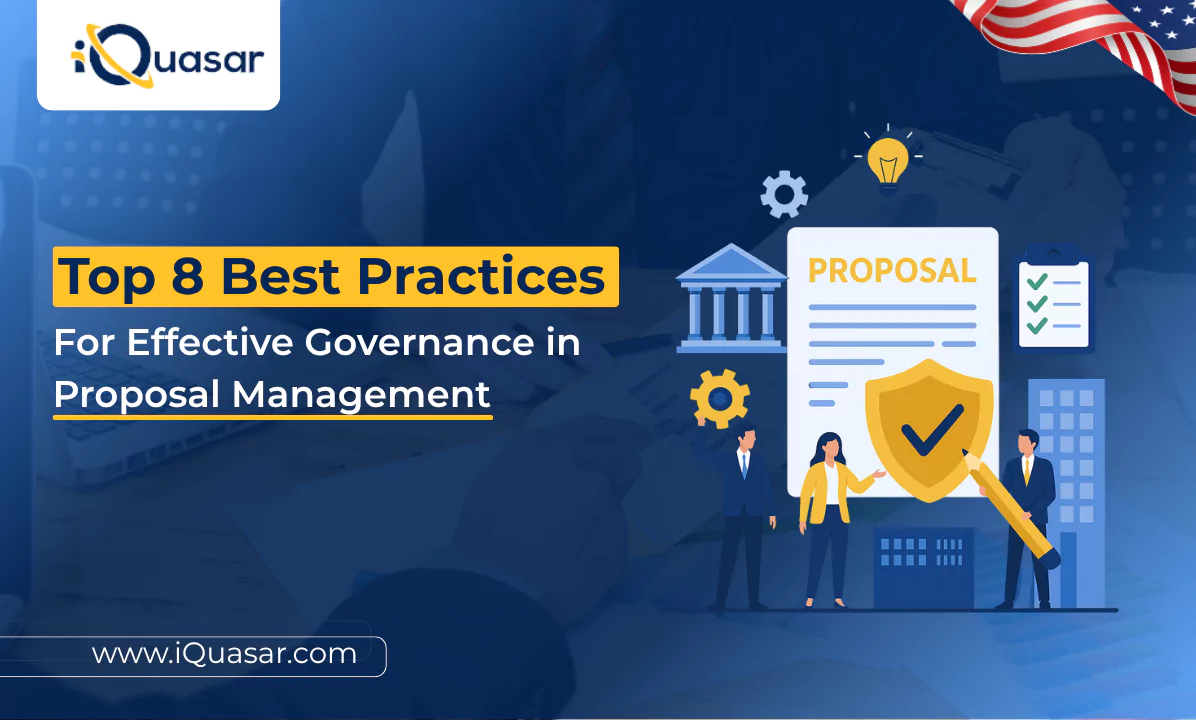
Governance refers to the systems, roles, and review mechanisms that guide the planning, development, and submission of proposals. Without strong governance, even well-qualified companies risk missing deadlines, non-compliance, or inconsistent messaging, each of which can cost a contract win. This blog will discuss the eight best practices to help organizations implement effective governance throughout their proposal management process.
Signs You Need Stronger Proposal Governance
1. When Your Proposal Process Lacks Structure
If your team approaches each proposal differently without a documented process, it can lead to confusion, duplicated effort, and critical oversights. Without structure, roles may not be clear, deadlines can slip, and content development becomes chaotic. A governance framework defines a standard proposal lifecycle, including intake, kickoff, writing, review, finalization, and bringing order and predictability to every submission.
2. When Decision-Making Is Slowing You Down
Proposals often operate on tight timelines, and slow or unclear decisions, such as whether to bid, what strategy to pursue, or who signs off, can delay progress or cause rushed responses. Governance ensures predefined decision-making workflows and roles are in place, including bid/no-bid criteria, escalation paths, and gate reviews to keep the proposal moving without bottlenecks.
3. When Compliance Mistakes Keep Occurring
Missing required documents, formatting incorrectly, or failing to follow submission instructions can result in disqualification, regardless of the proposal’s quality. If your team is repeatedly missing compliance elements, it indicates a gap in process control. Governance puts formal compliance checks in place, such as compliance matrices, audit trails, and QA reviews, so nothing is overlooked.
4. When Bids Involve Multiple Stakeholders or Partners
Large proposals often require input from pricing teams, technical SMEs, legal, contracts, and even external partners. Without centralized oversight, these contributions can become fragmented, inconsistent, or misaligned. Governance provides a unified structure that assigns roles, manages dependencies, and ensures integrated, coherent responses across all contributors.
5. When Reviews Feel Rushed or Unproductive
If reviews are haphazard, done last minute, or with unclear expectations, the proposal suffers. Governance embeds milestone-based reviews (such as Pink, Red, and Gold Teams) into the proposal schedule, each with a defined purpose to assess compliance, messaging, solution alignment, and readiness. This ensures reviews are timely and targeted and adds value at every stage.
6. When Teams Recreate Content Repeatedly
Rewriting boilerplate sections like management plans, past performance, or resumes for each proposal wastes time and reduces consistency. Governance supports building and maintaining centralized knowledge libraries and templates, enabling teams to reuse validated, pre-approved content that aligns with evaluation requirements, reducing turnaround time and increasing quality.
Also Read: Top 7 Mistakes to Avoid When Writing Government Proposals
7. When You’re Not Learning from Past Efforts
Submitting proposals without capturing lessons learned means missing opportunities for improvement. Governance establishes feedback loops such as win/loss analysis, post-submission debriefs, and performance tracking. These inputs feed into continuous improvement efforts, helping your team identify what works and what needs refinement.
8. When Proposal Risks Aren’t Tracked
All proposals carry risks, whether they have tight timelines, limited staffing, uncertain pricing, or unclear requirements. If your team lacks a way to identify, document, and mitigate these risks early, they can derail the submission. Governance introduces proactive risk management practices, ensuring that known issues are addressed before they escalate.
Why Proposal Governance Matters
Strong proposal governance delivers measurable value to organizations, including but not limited to:
- Efficiency: Reduces rework, last-minute rushes, and coordination gaps
- Consistency: Ensures every proposal meets quality and compliance standards
- Strategic Alignment: Keeps proposals focused on agency priorities and company goals
- Risk Mitigation: Identifies gaps and vulnerabilities before they impact the final product
- Improved Win Rates: Proposals are more compelling, compliant, and on-point
Implementing effective governance in proposal management is more than a best practice; it’s a competitive necessity. Whether you’re pursuing complex, high-value contracts or managing multiple proposals simultaneously, governance provides the structure, accountability, and oversight needed to deliver high-quality, compliant submissions consistently.
Professional proposal managers and consultants apply proven governance frameworks to streamline workflows, reduce risk, and align each proposal with strategic goals. By embedding governance into your proposal operations, you increase your probability of winning and position your organization for long-term success in the government marketplace.
For over 20 years, iQuasar has been a trusted consulting partner, helping small and medium-sized businesses succeed in the government marketplace. Ready to strengthen your next proposal and boost your win rate? Connect with our experts today to learn how we can help you craft a compliant, compelling submission that stands out.