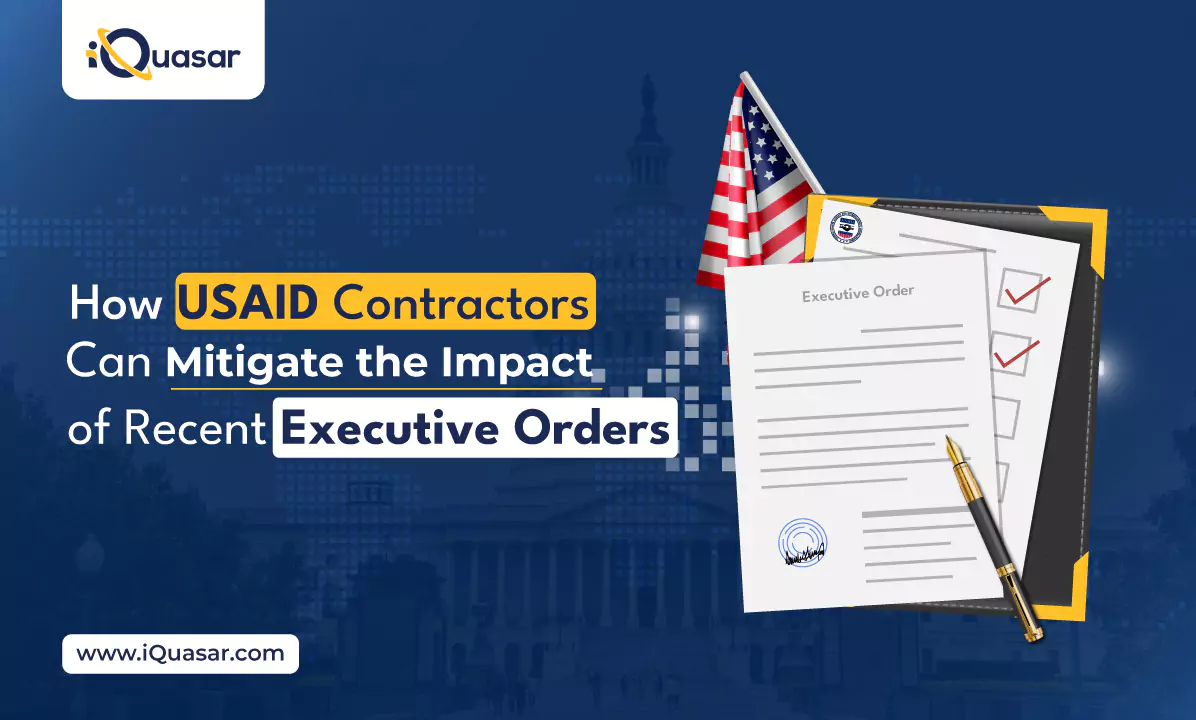

For US organizations deeply invested in international development, especially those working on contracts with the U.S. Agency for International Development (USAID), the recent executive orders have introduced a period of significant uncertainty. These policy shifts, most notably the implementation of the Foreign Assistance Pause EO, demand that contractors and grant recipients reassess their strategies, understand their rights, and proactively mitigate potential risks. This blog post aims to provide a clear overview of the situation and actionable steps your company can take to navigate this evolving landscape.
Understanding the Scope and Impact of Terminations and Suspensions with Recent Executive Orders
The current administration’s review of foreign assistance programs has triggered a series of events impacting USAID’s operational framework. The initial response included a widespread pause on new funding obligations, prompting the issuance of stop-work orders and suspension notices to numerous contractors and recipients. While a federal judge has temporarily intervened to suspend efforts to terminate existing contracts and grants, the long-term implications remain fluid.
The Scale of Terminations:
To date, approximately 230 USAID contracts and grants, collectively valued at $7.5 billion, have been terminated. This figure represents a substantial reduction in committed funding and affects a diverse range of projects across various sectors. Moreover, an estimated $500 million in subcontracts and $600 million in subgrants linked to these primary awards are also facing potential cancellation, amplifying the overall impact of the recent executive orders.
Financial Repercussions:
The financial implications of these terminations are considerable. In Fiscal Year 2024 alone, the terminated contracts accounted for $826 million in obligated funds, representing approximately 11% of USAID’s total contractor obligations. Similarly, terminated grants totaled $320 million in obligated value, equating to roughly 2% of USAID’s overall grant obligations for the same period.
Project Disruptions Across Critical Sectors
The consequences extend beyond mere financial losses, disrupting critical projects spanning climate change initiatives, public health programs, economic development endeavors, and more. For instance, the contracted delivery of essential medicines and health supplies has been halted, potentially jeopardizing the well-being of vulnerable populations.
Ripple Effects Throughout the Industry:
These changes are not isolated events; they have generated ripple effects throughout the international assistance industry. Both large multinational firms and smaller, specialized organizations are grappling with the challenges posed by project cancellations, funding cuts, and overall uncertainty.
Navigating the Legal Complexities Due to Recent Executive Orders
The recent executive actions have ignited legal debates surrounding the new administration’s authority and the processes employed in implementing these changes. Several key legal considerations are at play. David Black and Eric Crusius, attorneys with Holland and Knight, outline some possible legal challenges to stop work orders from USAID:
- The Administrative Procedure Act (APA): Contractors may contend that the en masse issuance of stop-work orders and suspensions is arbitrary and capricious, violating the APA’s requirement for reasoned decision-making.
- Executive Authority vs. Congressional Mandate: Questions have been raised regarding the administration’s authority to unilaterally transfer USAID’s functions to the State Department without explicit Congressional approval. This issue touches upon the fundamental separation of powers and the role of Congress in shaping foreign policy.
- Potential Legal Recourse: Fortunately, contractors and grant recipients possess legal protections grounded in existing laws, regulations, and precedents. These mechanisms provide avenues for seeking remedies, whether through injunctive relief to prevent further adverse actions or through monetary compensation to recoup losses incurred.
- Proactive Mitigation Strategies for USAID Contractors
In light of the prevailing uncertainty, USAID contractors can adopt a proactive stance, implementing strategies to safeguard their interests and minimize potential disruptions.
- Open Communication with USAID: Foster transparent and constructive communication with USAID contracting officers to seek clarification on the status of awards, potential modifications, and any other relevant developments.
- Comprehensive Contractual Review: Conduct a thorough review of all existing contracts and grants to fully comprehend termination clauses, payment terms, dispute resolution mechanisms, and other pertinent provisions.
- Diligent Cost Documentation: Maintain meticulous records of all costs incurred as a direct or indirect result of stop-work orders, suspensions, or terminations. This includes not only direct expenses but also indirect overhead costs and any incremental expenses stemming from project delays or disruptions.
- Expert Legal Counsel: Engage experienced legal counsel specializing in government contracts to provide guidance on navigating complex legal issues, asserting your rights, and pursuing appropriate remedies. Remain abreast of ongoing litigation and legal challenges pertaining to the executive actions, as these cases could set important precedents affecting the entire industry.
- Exploring Waiver Possibilities: Investigate opportunities to request waivers or exceptions to the Foreign Assistance Pause EO, particularly if your projects align with critical humanitarian or strategic objectives.
- Strategic Claim and Protest Filings: If the government fails to fulfill its payment obligations for goods or services duly received and accepted, promptly file a claim with the relevant contracting officer under FAR 52.233-1. Similarly, if a solicitation is canceled under circumstances that appear inconsistent with the government’s best interests, consider filing a formal protest.
- Diversification of Funding Portfolio: Mitigate over-reliance on USAID funding by actively diversifying your organization’s funding base, pursuing opportunities with other donor agencies, foundations, and government entities.
- Pursuing Contractual Adjustments: If work resumes following a period of suspension, actively seek a contract adjustment to adequately compensate for any increased or decreased costs incurred during the work stoppage.
- Strategic Approach to Terminations for Convenience: In the event of a termination for convenience, ensure that you diligently claim all allowable costs and profits on work performed to date, including expenses related to legal and accounting services.
To illustrate the breadth of impact, consider some notable examples of terminated contracts and grants. These examples underscore the diverse range of sectors and geographic regions affected by the recent policy shifts.
USAID contractors are currently operating in an environment characterized by uncertainty and change. By proactively understanding their contractual rights, diligently documenting costs, seeking expert legal counsel, diversifying funding streams, and actively advocating for the value of their work, organizations can effectively mitigate risks and navigate this evolving landscape.
Is your USAID-dependent business strategy now at risk? We recognize the daunting challenges you’re facing. Our team of experienced consultants can provide invaluable assistance by conducting a comprehensive assessment of your current business strategy, performing a thorough SWOT analysis to identify strengths, weaknesses, opportunities, and threats, and helping you chart a new course for sustainable success in this dynamic environment. Contact us today for a consultation and let us help you thrive.