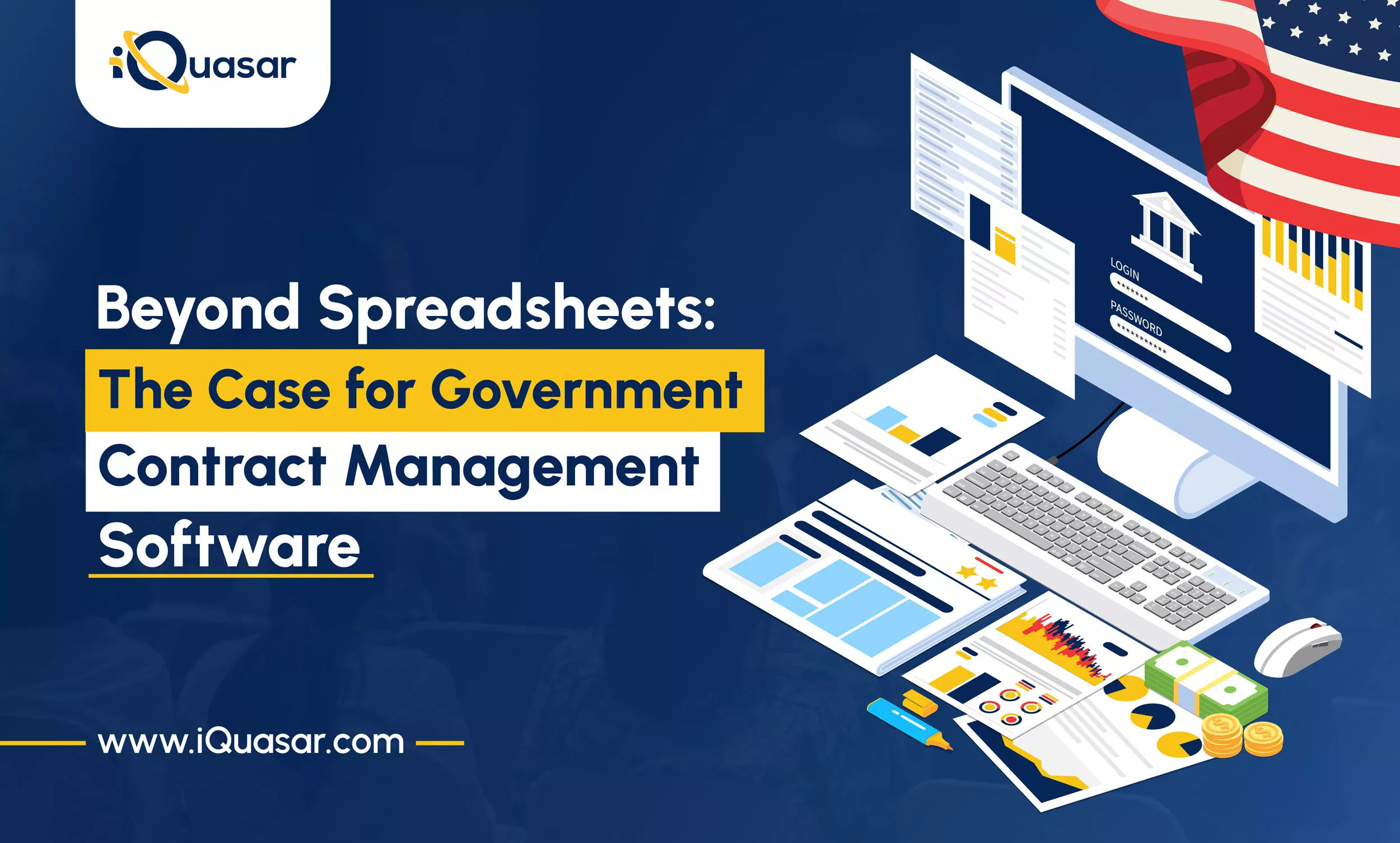
If your contracts team is still managing federal contracts through spreadsheets, shared drives, and email chains, you already know the risks. Deliverable dates get missed. Modification logs fall out of sync. Compliance calendars become outdated the moment a contract modification is issued. As your organization’s contract portfolio grows, these manual processes become not just inefficient, they become a liability. Government contract management software exists to solve exactly these problems, and the market is taking notice.
A Market Growing as Fast as the Problem It Solves
According to Grand View Research, the global contract management software market was valued at $2.83 billion in 2024 and is projected to reach $5.65 billion by 2030, growing at a compound annual growth rate of 12.7%. The public sector, driven by growing needs for transparency, regulatory compliance, and operational efficiency in handling government contracts and procurement workflows, is expected to see some of the strongest adoption growth of any segment.
The financial stakes of poor contract management are equally compelling. According to Deloitte’s contract excellence research, organizations experience an average 8.6% erosion in contract value due to poor contract management practices. For a contractor with $50 million in annual federal contracts, that translates to more than $4 million in preventable losses, year after year.
What Government Contract Management Software Does
At its core, government contract management software centralizes and automates the administrative functions associated with managing federal contracts. The best platforms provide a centralized contract repository where all contract documents, modifications, and correspondence are stored in a single, searchable location, no more hunting through email for the latest contract version.
Configurable alerts and dashboards keep your team aware of upcoming deadlines, overdue reports, and CDRL submission dates. Automated workflows route modifications for review and approval, update contract values and periods of performance, and maintain a complete modification history. Built-in clause libraries and compliance checklists help your team track FAR and DFARS obligations across your entire portfolio, and real-time dashboards give leadership visibility into contract status and compliance posture without requiring hours of manual data compilation.
Signs You Have Outgrown Manual Contract Management
The telltale signs are consistent: your team regularly misses or nearly misses deliverable deadlines, contract modifications are tracked inconsistently across different team members’ spreadsheets, audit preparation requires days of manual document gathering, and leadership lacks real-time visibility into contract health. If your portfolio is growing faster than your contracts team headcount, the risk of continuing with manual processes significantly outweighs the investment in a purpose-built platform.
Also Read: Government Contract Management: What Winning Contractors Know
What to Look for in a Government Contract Management Platform
Not every contract management platform is built with the nuances of federal contracting in mind. When evaluating options, prioritize platforms that offer FAR/DFARS clause libraries, integration with federal financial systems, support for multiple contract types, robust audit trails, and role-based access controls. Security is non-negotiable; any platform handling federal contract data must meet appropriate security standards, including FedRAMP authorization where required.
iQuasar supports organizations through every phase of contract management technology adoption, from requirements definition and platform selection. Connect with our team to discuss the right approach for your organization.